Unlock the Editor’s Digest for free
Roula Khalaf, Editor of the FT, selects her favourite stories in this weekly newsletter.
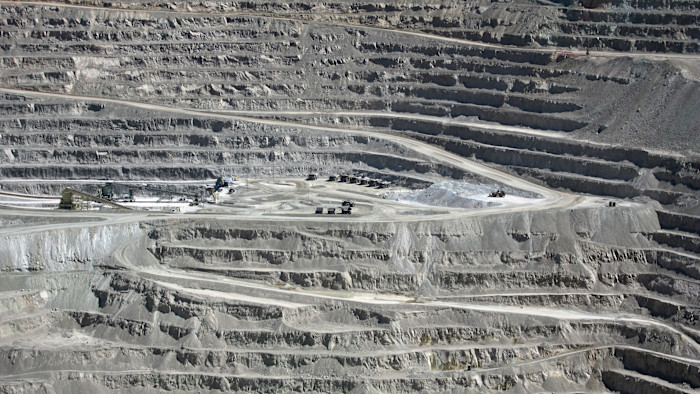
BHP reported a near 30 per cent increase in first-half net profit as the world’s largest mining company by market capitalisation benefited from booming demand for copper.
The Australian group on Tuesday said revenue in the six months to December 31 rose 11 per cent year on year to $27.9bn, as profit attributable to shareholders increased 28 per cent to $5.6bn. The results exceeded analysts’ expectations and shares in the company opened 7.5 per cent higher.
Mike Henry, chief executive, said the performance represented a “milestone for BHP” as copper contributed the largest share of its profit for the first time, accounting for 51 per cent of underlying earnings before interest, taxation, depreciation and amortisation.
BHP will pay a 73 cents per share interim dividend, which represents 60 per cent of earnings.
Copper is at the forefront of the global mining industry’s growth as demand from the energy and automotive sectors pushes prices higher.
Boosting exposure to copper was at the centre of BHP’s unsuccessful attempts to combine with Anglo American, most recently late last year. It was also central to recently ended talks between Rio Tinto and Glencore.
Henry told a media call that BHP was not “feeling any burning need” to pursue further takeover opportunities.
There was only a “small footprint” of deals that would align with the miner’s growth strategy, he said.
In lieu of big-ticket M&A, BHP has relied on smaller deals to maintain its position as the world’s largest copper producer, including the takeover of Australian company OZ Minerals, and the Chilean project Vicuña.
Canada’s Lundin Mining, which owns Vicuña with BHP, said this week that the Chilean project was progressing rapidly, with plans to spend $7.1bn in an initial development phase.
BHP has also benefited from the booming price for other metals and minerals that it produces as a byproduct of copper mining, including gold, silver and uranium. About $2bn of revenue was generated from non-core products in the first half.
Henry said various projects “put meat on the bones” after BHP’s last month lifted its copper growth projections, with the company aiming to produce 2.5mn tonnes annually by the mid 2030s.
Saranga Ranasinghe, at Moody’s Ratings, said copper was now a “strong earnings anchor” for the Australian company. “BHP has lifted its copper production guidance at a time when supply has been removed from the market, which is supportive of stronger future cash flows as higher volumes coincide with tighter market conditions,” she said.
BHP has meanwhile signed a $4.3bn deal with Canada’s Wheaton Precious Metals to supply silver from its Antamina mine in Peru, seeking to benefit from the sharp rise in the metal’s price.
The deal follows the $2bn sale of a stake in the miner’s Western Australian power network to Global Infrastructure Partners in December as part of a plan to free up $10bn in undervalued assets within its business.
BHP’s iron ore production has been in the spotlight as a result of negotiations with China Mineral Resources Group, a Beijing-backed central buying group, with certain grades of the Australian company’s domestic production blocked.
But BHP said iron ore production rose 2 per cent in the first half, adding it expected Chinese demand for what is a key ingredient in steel making to remain resilient.
Henry said negotiations with CMRG has been “tough” at times but that BHP retained deep relationships with the Chinese steel sector. “I’m confident that there’s a path through this,” he said.