Unlock the White House Watch newsletter for free
Your guide to what Trump’s second term means for Washington, business and the world
The US, the UK and other powers put diplomats and citizens in the Middle East on alert on Friday, ordering some to leave their positions, amid fears that a Trump administration attack on Iran could spiral into a regional conflict.
The US embassy in Jerusalem told non-emergency staff and family members that they can leave Israel, on a day when oil prices rose 3 per cent spurred by worries about an imminent attack on Tehran and the container shipping line Maersk said it was rerouting some vessels to avoid the Red Sea.
“Persons may wish to consider leaving Israel while commercial flights are available,” the US embassy said.
Canada urged its citizens to leave Iran, warning that “hostilities in the region could resume with little or no warning”. China, India and Poland have issued similar directives, while the UK embassy in Tehran said its “staff have been temporarily withdrawn from Iran”.
Tensions are rising across the Middle East, with US President Donald Trump ordering the largest American military build-up in the region since the Iraq war in 2003 and threatening to launch strikes on Iran if it does not agree to a deal over its nuclear programme.
The Gerald R Ford, the US’s largest and newest aircraft carrier, was approaching Israel on Friday. Its strike group includes three destroyers, thousands of troops and dozens of aircraft.
Tehran, which held nuclear talks with the US on Thursday, has threatened to retaliate against American bases across the region if it is attacked, sparking fears of a broader confrontation that could draw in Israel, which fought a 12-day war with Iran last year.
Oman’s foreign minister Badr Albusaidi said “significant progress” had been made in this week’s US-Iranian negotiations in Geneva and that talks would “resume soon after consultation in the respective capitals”.
But while Trump has said that his preference is for a diplomatic resolution, he has made clear that a military operation is also on the table.
Last Thursday, he said that the Islamic republic had a “maximum” of 15 days to reach a deal or “bad things will happen”. He also said he was considering limited strikes designed to press Tehran into making a deal.
US secretary of state Marco Rubio is due to visit Israel on Monday and Tuesday, Washington said on Friday, adding that he would discuss “regional priorities” including Iran.
Trump has given various reasons for a possible intervention, ranging from curbing Tehran’s nuclear programme to ending its support for militant groups around the region. US officials have raised concerns about Iran’s ballistic missile programme.
US negotiators have not yet commented on the outcome of the Geneva talks, although Iran’s foreign minister Abbas Araghchi characterised them as “one of the best, most serious and longest rounds of negotiations” with the US.
“Positions have drawn closer to a mutual understanding in some areas,” he said. “We made good progress on the nuclear case and the lifting of sanctions.”
Tehran regards the lifting of US sanctions as essential for any sustainable and mutually acceptable deal.
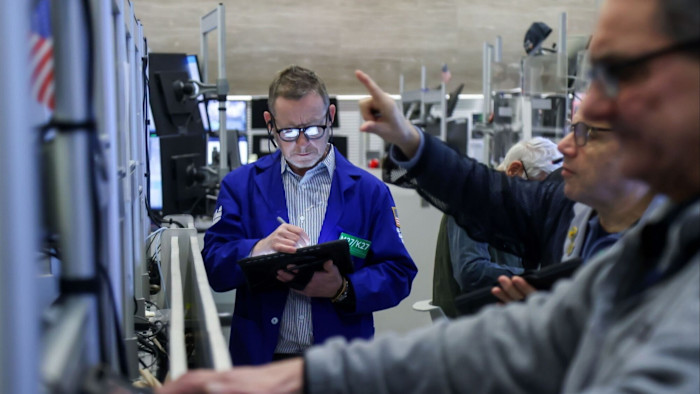
In a sign of the heightened tensions on Friday, Brent crude, the international benchmark, climbed almost 3 per cent to $72.58 a barrel.
Traders fear that, in the event of a strike on Iran, Tehran could retaliate by targeting the Strait of Hormuz, a narrow waterway through which about a fifth of the global crude shipped by sea passes.
The US embassy said its communication to staff on Friday, which followed an order earlier this week for non-essential staff to evacuate the US mission in Lebanon, was due to “safety risks”, but did not elaborate on what they were.
Trump also threatened strikes to “help” anti-regime protesters in Iran during mass rallies last month, and subsequently threatened action if Tehran executed any demonstrators. He later claimed to have prevented the executions of hundreds of people.
Amnesty International warned this week that Iran’s judiciary had sentenced eight people to death and said that 22 others, including two children, “are at risk of the death penalty amid fast-tracked torture-tainted grossly unfair trials”.
Iranian officials have not yet confirmed these figures, but the country’s judiciary has promised to prioritise cases related to last month’s protests and vowed to make no concessions.
With additional reporting by Verity Ratcliffe and Jamie John in London