Unlock the White House Watch newsletter for free
Your guide to what Trump’s second term means for Washington, business and the world
“We will measure our success not only by the battles we win, but also by the wars that we end — and perhaps most importantly, the wars we never get into.”
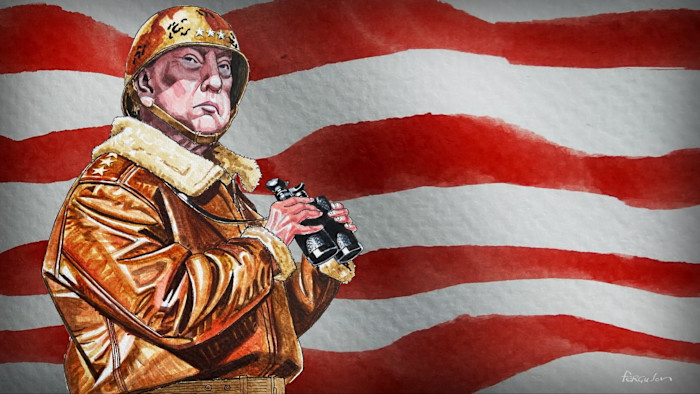
That was Donald Trump in January 2025. A little more than a year after his inaugural address, the US president has deployed a vast military force to the Middle East. He says that he will make a decision about whether to attack Iran in the coming days.
The experiences of the past year seem to have persuaded Trump of the virtues of war. The bombing of Iran’s nuclear installations in June and the capture of Nicolás Maduro, the president of Venezuela in January, went well. In their aftermath, Trump was exultant.
But success can breed overconfidence. If Trump keeps deploying US troops in the search for quick wins, eventually he may get a prolonged defeat instead.
The mooted Iranian operations already involve a greater level of risk than Trump’s previous military campaigns. The clue is in the dangerously vague objectives of the proposed campaign.
At the moment, Trump is emphasising the need to stop the Iranian nuclear programme — the same programme that he insisted had been completely obliterated last June. But, earlier this year, he promised that “help is on its way” for Iran’s protest movement — suggesting that the US goal might be regime change. Other aims that the US has floated are the destruction of Iran’s missiles and the end of Iranian backing for Hizbollah and Hamas.
Unlike June’s bombing of the Fordow nuclear plant and January’s seizure of Maduro — most of these aims cannot be achieved by US military action alone. They require something else to happen as a result of the military operation — whether it is profound political concessions by the current regime or a successful popular uprising inside Iran.
Vague or unachievable war aims increase the chances of a prolonged US military operation. The longer the war goes on, the higher the chances of successful Iranian retaliation. Even a 12-day conflict with Iran last June severely strained America’s stock of missile interceptors — with the US burning through roughly a quarter of its total stock of Thaad interceptors to defend against Iranian ballistic missile attacks on Israel.
There are also 30,000 to 40,000 US troops stationed in the region that could be targeted by Iranian drones or missiles. The cities and infrastructure of US allies in the region are also potentially vulnerable to attack. The water supply of Riyadh, the capital of Saudi Arabia, is heavily dependent on the operation of two large desalination facilities.
Tehran has hitherto sought to avoid uncontrolled escalation in its previous military clashes with the US and Israel. Even last June’s retaliatory Iranian attack on an air base in Qatar was signalled in advance and quickly ended. But if the regime concluded that it really was fighting for its survival, its appetite for risk could change.
It is possible that war could give fresh impetus to the opposition protesters who have come out again recently. But there is also a risk that an attack on Iran could lead to a rally round the flag effect — undermining the domestic opposition to the clerical regime.
Even if a war does precipitate the final collapse of the Islamic Republic, the lessons of the overthrow of brutal regimes elsewhere in the Middle East are very discouraging — particularly when regime collapse is caused by foreign military intervention.
In Iraq, Syria and Libya the consequences included prolonged conflict, massive civilian death tolls, millions of refugees, many of whom fled the country, and the creation of an anarchic environment in which terrorist groups were able to take hold.
The Netanyahu government in Israel has long called for regime change in Tehran. An Iran that collapsed into anarchy might fit a narrow definition of the interests of Israel, since it would gravely weaken a dangerous threat to the Israeli state. But it could pose a real danger to Trump’s allies in the Gulf states, which are much closer to Iran.
Trump may believe that the US itself will always be insulated from the potentially malign consequences of military action in the Middle East — provided it avoids deploying ground troops and relies on the “big, beautiful” ocean to keep trouble well away from the American homeland.
But previous US presidents have also tried to avoid putting boots on the ground in the Middle East, only to find that unexpected events forced their hand. Barack Obama was just as wary of new wars in the Middle East as Trump, but still had to deploy American troops to combat Isis, after the fall of Mosul in 2014.
Of course, it is very possible that Trump will steer clear of a new conflict in Iran at the last minute — or that his latest military campaign will once again be crowned with success. But a further military triumph in Iran could well increase Trump’s appetite for risk, raising the possibility of an eventual calamity.
In 2016 and 2024, Trump campaigned as a peace candidate — and successfully tapped into disillusionment with the wars in Iraq and Afghanistan. How ironic — and dangerous — that, just a year into his presidency, he has developed a taste for the wars of choice that he once denounced.
gideon.rachman@ft.com