Unlock the White House Watch newsletter for free
Your guide to what Trump’s second term means for Washington, business and the world
This article is an on-site version of our Unhedged newsletter. Premium subscribers can sign up here to get the newsletter delivered every weekday. Standard subscribers can upgrade to Premium here, or explore all FT newsletters
In the middle of yesterday afternoon, we had a nice newsletter outlined for today. It was very different from the one you are reading now: it pointed out how financial markets had, to a remarkable degree, taken the war in Iran in stride. It attributed this insouciance mainly to two main factors.
First, borrowing the words of Marc Ostwald at ADM Investor Services, to a “deep seated and heavily conditioned” muscle memory in markets, built up over the past six years and beyond, “to prepare for a recovery in risk assets”.
Second, to a belief that the oil price would not stay high for long because the war (at least so far as it affects the flow of oil through the Strait of Hormuz) was sure to end quickly. That belief appeared vividly, as recently as yesterday morning, in a Brent oil futures curve that sloped down at a historically steep angle. This deep backwardation in oil futures showed a mad scrabble for barrels in the very near term, but no particular worry about getting affordable crude a month or two down the road.
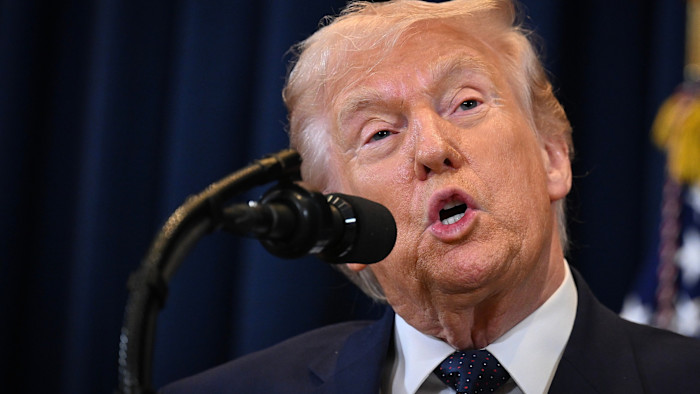
In any case, we had been thinking that the market was a little too relaxed. That thought turns out to have been wrong. Maybe. As everyone now knows, President Donald Trump came out late yesterday and declared that the war was “very complete, pretty much.” This sent oil prices crashing:
It is, of course, utterly unclear whether the president’s comments have anything to do with a change in balance of the war on the ground. What they did communicate clearly, to the delight of markets, was that Trump is looking for an exit.
That the president did not have any interest at all in a long war, and would find a way out sooner rather than later, was a more or less consensus position in the market. The TS Lombard macro team summed up its view with admirable plainness, half a day before Trump declared the war over:
Our parameters boil down to this: Trump won’t want energy prices spiking this close to the midterms and if he declares victory, Iran will do the same and energy prices will settle somewhere below $80
The notion that Trump had seen his martial spirit deflated by oil prices ripping past $100 was reinforced by a speech he gave later in the afternoon. He mentioned the war briefly at the outset, as a “short-term excursion,” and then focused on a long list of domestic accomplishments. The speech radiated with desire to move on.
The oil futures curve promptly flattened as the short end collapsed. On Sunday night the difference in price between one- and two-month Brent contracts had hit $9 — a level never reached after Russia’s 2022 invasion of Ukraine. The oil market, in other words, had seen Trump’s retreat coming:

And for all the dramatic headlines, while global stock markets have fallen since the start of the war, the declines have been orderly. And they should be seen in the context of both a strengthening dollar, which dragged down international indices, and the strong equity rallies that had preceded the war almost everywhere:

Similarly, the sector performance of the US market never reflected the expectation of a long war. Yes, the energy-hungry industrials and materials sectors fell but they had been having a great run. More importantly, the defensive sectors (healthcare, staples) did not get the boost you would see in a panic. On the contrary:

There was, it must be said, one mini-meltdown. Pre-war, rates traders had clearly been betting on a decline in short-term rates globally. The possibility of oil-driven inflation blew them out of those trades, especially in Europe, leading to a big jump in two-year yields. What happens to short rates in the next few days will be fun to watch:

Is Trump’s declaration that the war is all but over true? We have no idea. All we can note is that it is not enough for Trump to “Taco”, as he did with his absurd “liberation day” tariff pronouncements. For the war to end takes the co-operation of the Iranians and the Israelis, for a start. And for the impact of the war on energy markets to subside requires the participation of oil producers and shipping companies. Vikas Dwivedi at Macquarie Group points out that even if the oil producers quickly resume normal activity, the market will remain shaky for months. “Logically, with a large number of vessels trapped in the Gulf, reopening the straits would cause a surge of oil on the water followed by a drought as loading facilities restart, creating market oscillations lasting months.” Wars don’t end just because someone declares them to be finished.
One good read
“Evil motives.”
FT Unhedged podcast

Can’t get enough of Unhedged? Listen to our new podcast, for a 15-minute dive into the latest markets news and financial headlines, twice a week. Catch up on past editions of the newsletter here.
Recommended newsletters for you
Due Diligence — Top stories from the world of corporate finance. Sign up here
The AI Shift — John Burn-Murdoch and Sarah O’Connor dive into how AI is transforming the world of work. Sign up here