Unlock the Editor’s Digest for free
Roula Khalaf, Editor of the FT, selects her favourite stories in this weekly newsletter.
Stocks and bonds tumbled on Tuesday as fears of a prolonged shock to energy prices from the widening war in the Middle East rattled global markets.
In Europe, the benchmark Stoxx Europe 600 was down 2.6 per cent, its steepest daily drop since the aftermath of President Donald Trump’s trade war last April, as European gas prices surged a further 20 per cent. Germany’s Dax fell 3 per cent, adding to a 2.8 per cent drop on Monday.
Futures tracking the S&P 500 and Nasdaq 100 indicated that the Wall Street benchmarks would drop 1.5 per cent and 2 per cent respectively.
“It’s panic selling,” said Emmanuel Cau, head of European equities strategy at Barclays. “This is a stagflationary scare. The market was complacent about the scale of this war [before the weekend].”
Government bonds also sold off, particularly in Europe, as rising energy prices prompted traders to scale back bets on further interest rate cuts.
Traders have started to price in a 30 per cent chance of a rate rise by the European Central Bank before the end of the year, according to levels implied by swaps markets. Before the conflict, traders were hoping for further cuts rather than increases.
The move has pushed the two-year Bund yield 0.1 percentage points higher to 2.16 per cent, adding to a 0.08 percentage point rise on Monday. Bond yields move inversely to prices.
In the UK, the chance of a quarter-point cut at the Bank of England’s meeting later this month has fallen to about 25 per cent, from 90 per cent on Friday. The market is now only fully pricing one such cut by the end of the year.
The yield on the two-year gilt climbed 0.13 percentage points to 3.78 per cent, adding to a 0.12 percentage point rise on Monday.
Jim Reid, at Deutsche Bank, said “the conflict has shown no sign of easing thus far” and that events such as the drone attack on the US embassy in Riyadh were “adding to fears about a more protracted conflict”. Economists from the bank wrote on Tuesday that “should energy prices stick at current levels, we would expect [BoE] rate cuts to slow”.
US Treasuries also sold off, with the two-year yield 0.06 percentage points higher at 3.55 per cent.

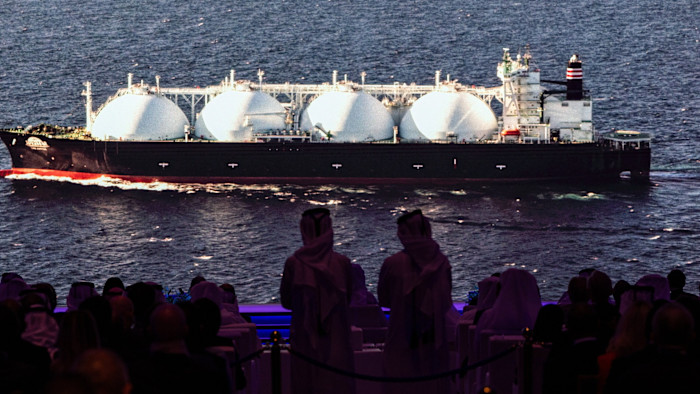
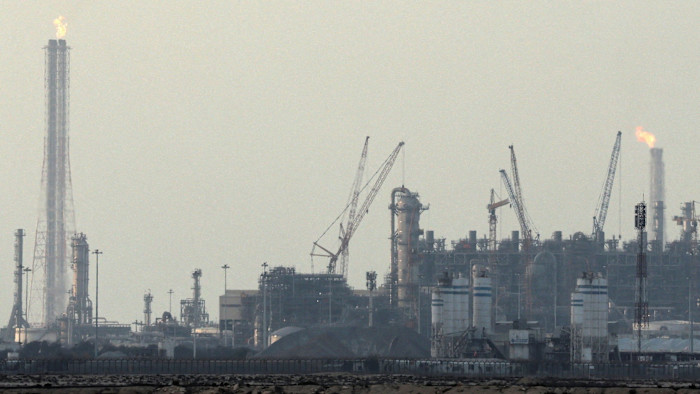
European natural gas prices soared as the market continued to reel from Qatar’s decision to stop production after Iran targeted energy infrastructure in the Gulf state.
Europe’s gas benchmark, TTF, surged to €56.5 per MWh, extending a 39 per cent increase on Monday, when QatarEnergy, the world’s largest liquefied natural gas company, halted its operations.
Qatar produces a fifth of the world’s LNG production and is the biggest supplier to Asia, triggering a renewed round of competition with Europe for scarce cargoes of the fuel.
The Gulf’s energy infrastructure is in the crosshairs of Tehran as the regime retaliates against the US-Israeli strikes that began on Saturday. On Monday, the Qatari defence ministry said Iran targeted Qatar’s LNG facility in Ras Laffan.
The steep rise in European gas prices represents the biggest danger so far to the global economy from the widening conflict in the Middle East.
Oil prices also extended their gains on Tuesday, with Brent crude, the international benchmark, rising 5.5 per cent to $82 a barrel.
The supply of oil and gas from the region has already been severely reduced, with most ships avoiding the Strait of Hormuz, a key waterway at the entrance to the Gulf.