One of its previous eruptions may have plunged generations into a dark age before becoming the death knell for the entire civilisation – and there are fears it is beginning to stir again
After biding its time in silence for nearly 50 years, one of the world ’s most dangerous volcanoes has started to stir.
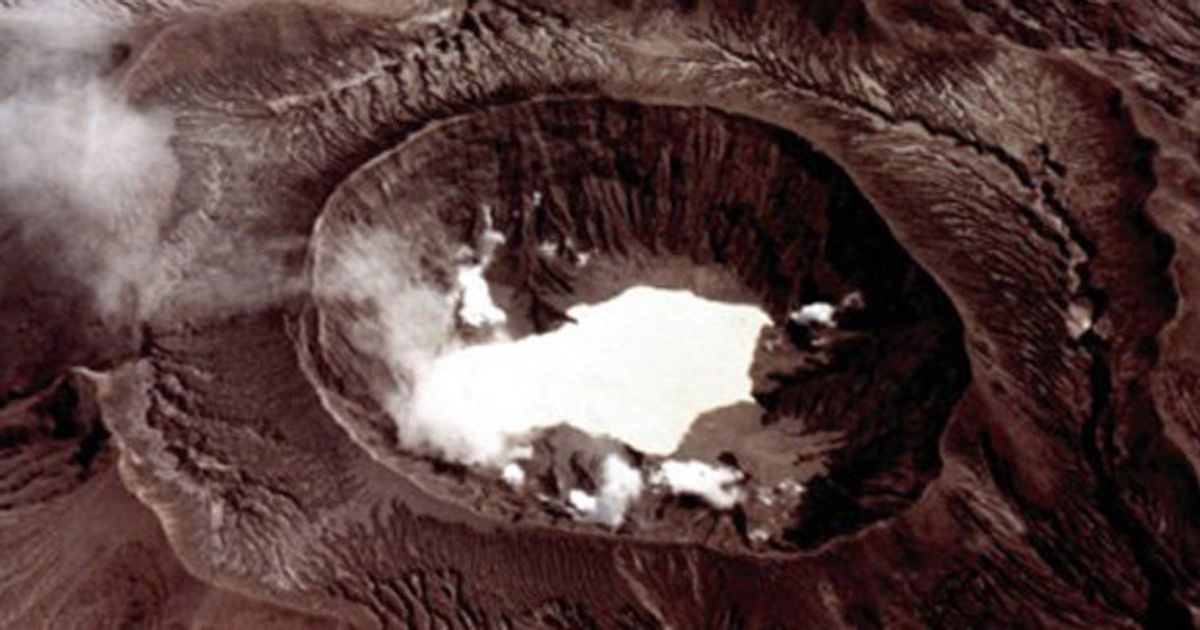
The last time Mexico’s El Chichón volcano blew its top, the eruption was nothing short of cataclysmic. High-sulfur eruptions and anhydrite-rich magma destroyed the summit’s dome, resulting in lava flows and surges that stretched an eight kilometre radius.
In a little over a week, with three eruptions in total, El Chichón left behind it a trail of death and devastation. Thousands were killed, entire villages were razed, and several thousands more fled hooping to evade the carnage. That was in 1982.
What happened in the 6th century was far, far worse. One of the volcano’s previous eruptions may have been a civilisation-ending event, a 2017 research paper claims The study found the Mexican volcano may have contributed to the downfall of the Mayan people, driving them into a century-long “dark age”, before, ultimately, their downfall.
Now, in 2026, volcanologists charged with monitoring the deadly stratovolcano have started to notice changes occurring beneath the earth and within the volcano itself, with all signs pointing to the return of El Chichón’s old, very active and very violent tendencies.
According to environmental news outlet Green Matters, scientists from the National Autonomous University of Mexico (UNAM) tracked the volcano’s movements in the latter half of 2025. They recorded consistent movement within El Chichón’s crater. Elevated temperatures, gas causing visible bubbling and sulphur formations were all observed. The research team then inspected the crater lake and found hollow sulphur spheres that were formed in the presence of liquid sulfur pools. Lakebed temperatures also spiked.
In fact, changes have been occurring within the volcano for some time. Dr Mariana Patricia Jácome Paz studied El Chichón from 2021 to 2025, telling her audience in a recent lecture that changes are occurring just beneath the earth’s crust — changes that indicate El Chichón may be stirring to wake.
Dr Paz said that the spike in activity is most likely caused by superheated groundwater reacting to hot rocks, rather than reacting with molten magma as it rises towards the planet’s surface.
“The observed behaviour is consistent with hydrothermal processes or minor steam-driven explosions,” Dr Paz said.
It also indicates the volcano is shifting away from its sleepy dormant state towards a period of increased activity.
A 2025 paper by Dr Paz indicates new magma-hydrothermal interactions are taking place within El Chichón. In simple terms, this means rising hot magma is coming into contact with water beneath the earth, which can create steam, pressure and, ultimately, an eruption. Significant magma-hydrothermal interactions can even lead to mega-explosive volcanic eruptions.
Gas sampling has also revealed an uptick in hydrogen sulphide and carbon dioxide near the volcano’s crater. These gases can pose a grave risk to life if they build up in enclosed or low-lying areas, so scientists are keeping a close watch.
Despite the growing concern, Mexican scientists have said such emissions are common in active hydrothermal systems and do not necessarily point to an imminent eruption.
Researchers are continuously monitoring the changes bubbling beneath the surface of Mexico’s “spicy mountain”, using drones, satellite sensors and on-site instruments. They are tracking every shift in the hope of preventing a repeat of the 1982 disaster, with early detection key to public safety.
Experts say that, for now, there is no cause for public alarm. But the renewed activity below our feet is subject to change, and dormant volcanoes are rarely truly inactive — even if they have been suspiciously quiet for nearly 50 years.