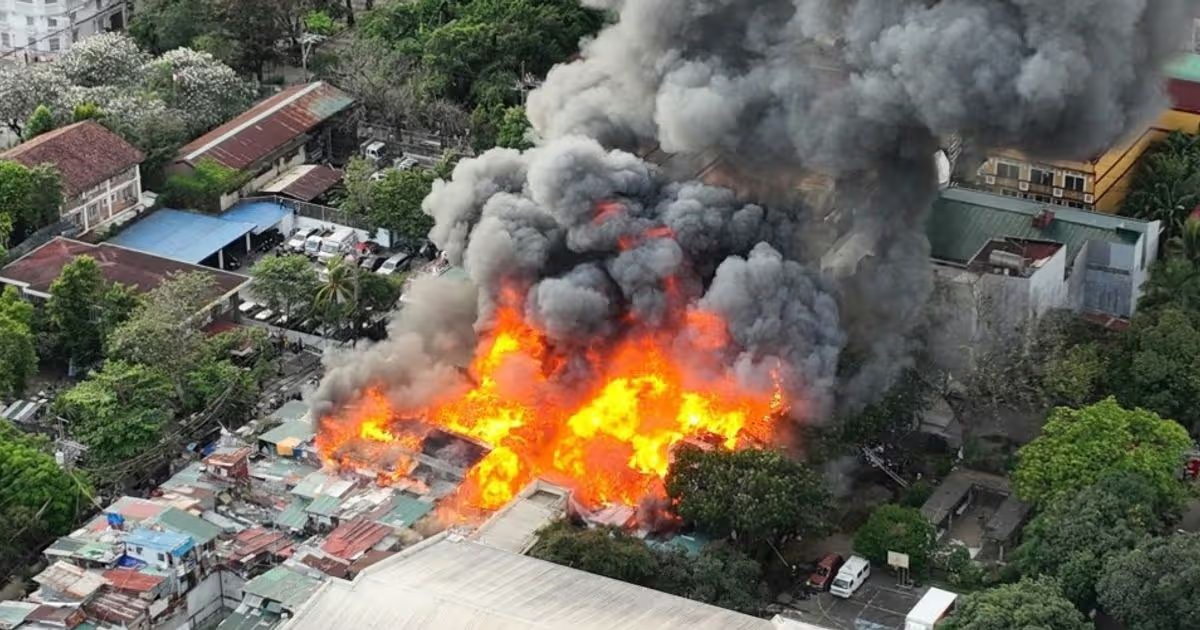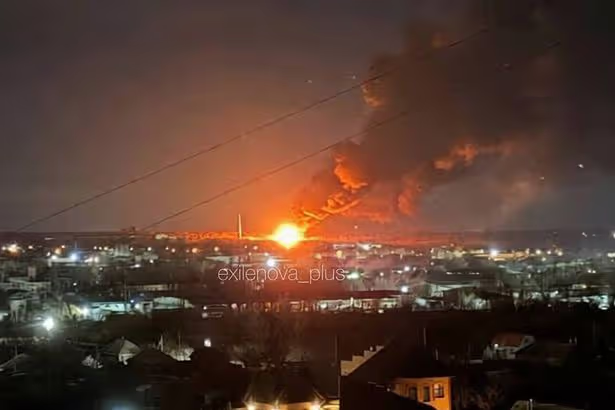
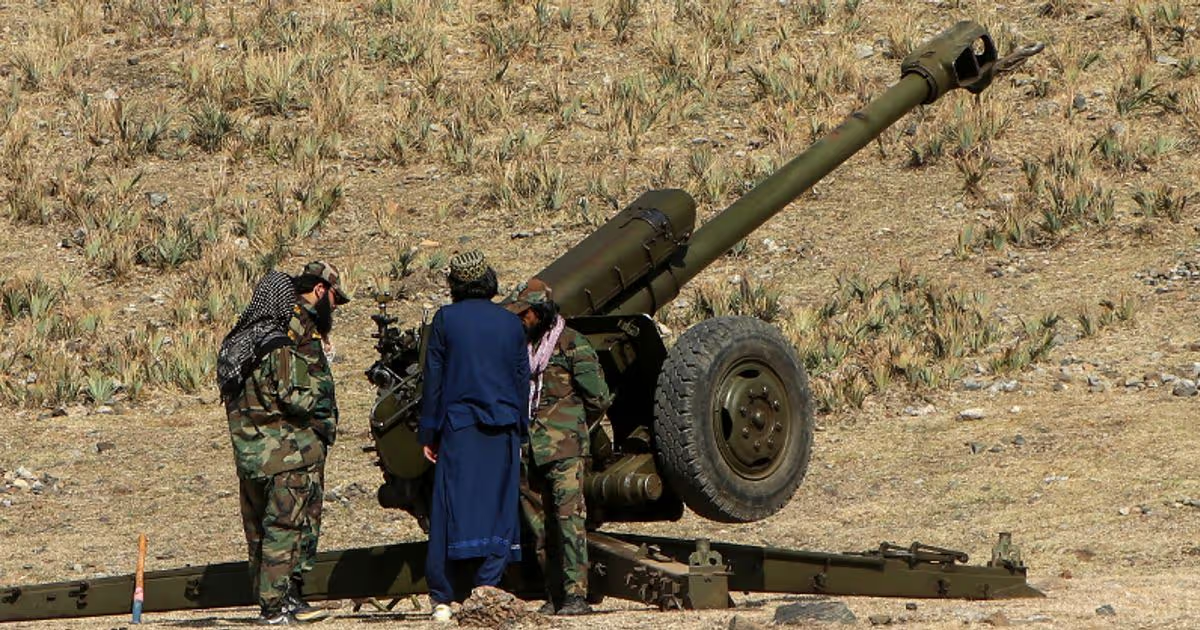
Several Afghan cities including the capital Kabul and the second city of Kandahar were bombed in Pakistani air-strikes following an Afghan frontier attack on Thursday
Pakistan declared war on Afghanistan on Friday as they exchanged bloody-cross border attacks in a dramatic escalation between the two neighbours.
The outbreak of violence has triggered major alarm that it could further destabilise the region, creating no-go areas from where terror groups could plot attacks on the west. Britain as a junior partner to the United States has long been a primary target of groups like al-Qaeda and Islamic State who have thrived before in Afghanistan.
A western security source told the Mirror: “Clearly Afghanistan and areas in Pakistan returning to chaos and anarchy will act as a magnet for terror groups. They are there already and this situation will further risk of groups being free and able to plot against the west – and the UK could well suffer as a result.”
Several Afghan cities including the capital Kabul and the second city of Kandahar were bombed in Pakistani air-strikes following an Afghan frontier attack on Thursday. At least 274 Taliban officials and militant fighters were killed in the bombing sorties as warplanes hit at least 22 Afghan military targets, with a dozen Pakistan soldiers dying in fighting.
READ MORE: Pakistan-Afghanistan war: Why the Taliban hate the blood-soaked border explainedREAD MORE: Putin blasts Ukraine with 500-bomb attack in defiance of US calls for war to end
Hours after Pakistani warplanes rocked Kabul Defence Minister Khawaja Mohammad Asif said: “Our patience has now run out. Now it is open war between us.”
Afghanistan launched a cross-border attack on Pakistan late Thursday, saying it was in retaliation for deadly Pakistani airstrikes on Afghan border areas Sunday.
Ensure our latest headlines always appear at the top of your Google Search by making us a Preferred Source. Click here to activate or add us as your Preferred Source in your Google search settings
Afghan government spokesman Zabiullah Mujahid said: “Pakistan has never sought to resolve problems through dialogue. We have targeted important military targets in Pakistan, sending a message that our hands can reach their throats and that we will respond to every evil act of Pakistan.”
It is believed to be the first time Pakistan has deliberately targeted Afghan Taliban officials and not focused on fighting groups. Pakistan blames the Afghan Taliban regime for terror attacks planned and launched from within Afghanistan.
It has even tried to blame Afghanistan for teaming up with India, blaming its other neighbour for terror attacks as it has done before. Asif said Pakistan had hoped for peace in Afghanistan after the withdrawal of NATO forces in 2021 and expected the Taliban to focus on the welfare of the Afghan people.
But he claimed the Taliban had turned Afghanistan “into a colony of India,” with which Pakistan has periodically engaged in wars since independence from British rule in 1947. India’s ties with Afghanistan have improved recently, with offers of enhanced bilateral trade, to the annoyance of Islamabad.
Tensions have been high for months, with border clashes in October killing dozens of soldiers, civilians and suspected militants. Pakistan accuses Afghanistan’s Taliban government of harbouring militant groups that then stage attacks across the border and also of allying with its arch-rival India.
A Qatari-mediated ceasefire ended the fighting, although the two sides still occasionally trade fire. Several rounds of peace talks in Istanbul in November failed to produce a lasting agreement.
Afghan authorities in the eastern Nangarhar province said fighting was ongoing in the Torkham border area Friday morning. The province’s information directorate said Pakistani mortar fire hit civilian areas in Torkham, including a refugee camp which had been evacuated overnight.
In response, Afghanistan was targeting Pakistani army posts across the border, it said. Asif accused Afghanistan of “exporting terrorism.”
Militant violence has surged in Pakistan, with Afghanistan accused of supporting the Pakistani Taliban, or TTP, and outlawed Baloch separatist groups. Tension has existed on the Durand line frontier between Pakistan and Afghanistan since 1893 when British diplomat Walter Durand created it as a buffer between the then British Indian empire and Russia.
It split the Pashtu tribe who live on both sides and make up most of the Taliban, whilst it did the same to the Balochs, who are also behind attacks in Pakistan. Pakistan accuses the TTP – which is separate from but closely allied with Afghanistan’s Taliban – of operating from inside Afghanistan. Both the group and Kabul deny that charge.
Pakistan has also frequently accused neighbouring India of backing the outlawed Baloch Liberation Army and the Pakistani Taliban, allegations New Delhi denies. Afghanistan said Thursday’s cross-border attack was in retaliation for deadly Pakistani airstrikes on Afghan border areas Sunday.
The governments have issued sharply differing casualty claims. Pakistan’s army spokesperson Lt. Gen. Ahmed Sharif Chaudhry said Pakistani air and ground operations killed at least 274 members of Afghan forces and wounded more than 400.
It is believed 12 Pakistani soldiers were killed and 27 others were wounded. One Pakistani soldier was missing in action. Mujahid rejected the high number of Afghan casualties as “false”.
He said 55 Pakistani soldiers were killed and also “many” Pakistani soldiers were captured. Thirteen Afghan soldiers had been killed, he said, and another 22 wounded, while 13 civilians were also wounded.
Pakistan’s Information Minister Attaullah Tarar said Pakistan’s anti-drone systems shot down several small drones over the northwestern cities of Abbottabad, Swabi, and Nowshera Friday. He said the drones appeared to be part of a failed attack by the Pakistani Taliban, and there were no casualties.