
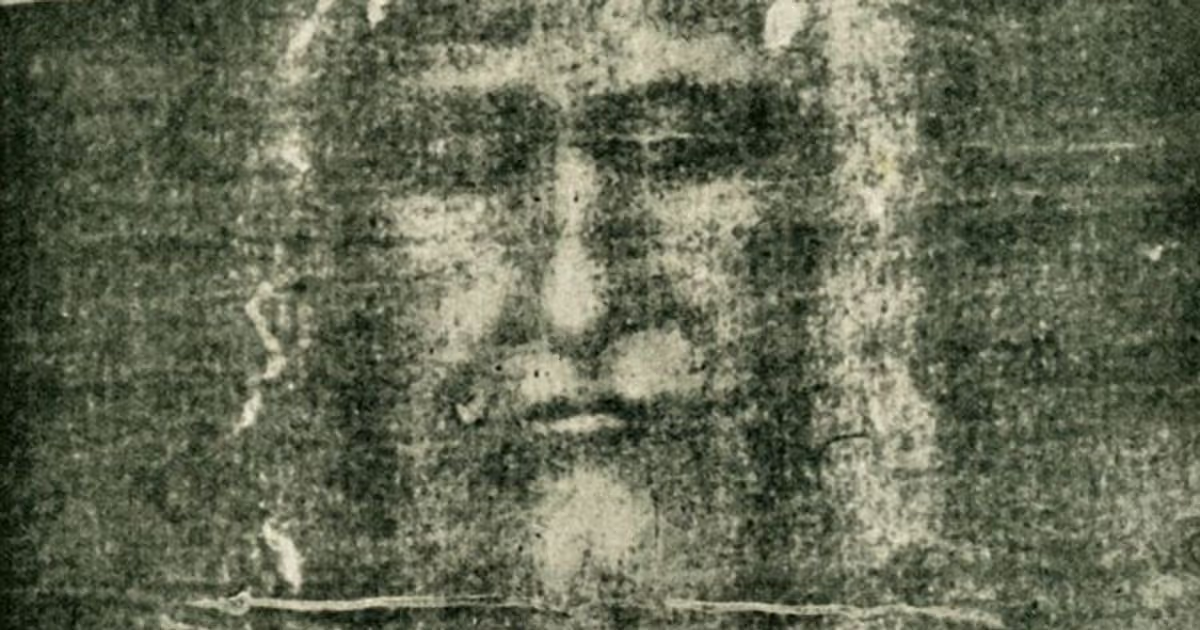
Experts fire back after a study concluded the relic was a forgery created by a medieval artist
Controversy and mystery surrounding the Shroud of Turin have flared up again, with a fresh scientific rebuttal taking aim at a headline‑grabbing theory the artefact is a forgery made by a medieval artist and not an imprint of Jesus after the Crucifixion.
A new critique in the peer‑reviewed journal Archaeometry challenges a study by Brazilian researcher Cicero Moraes, who last summer in the same journal contrasted how fabric would behave when draped over both a living person and a sculpture made on a flat surface with shallow, raised areas.
He concluded that an impression from a shallow carved relief matched the shape and dimensions seen on the Shroud far more closely.
The Shroud, kept in Turin’s Cathedral of St John the Baptist, is said to bear the imprint of Jesus after his crucifixion and burial. The cloth, measuring 14.5 feet by 3.7 feet, carries a faint image of a male figure with injuries consistent with a crucifixion death.
China’s crazy flying starfighter carrier, ‘coral’ found on Mars, man vs bear, and a human population gaffe – all this and more in our latest weird science newsletter
For generations, it was regarded as a sacred relic from over 2,000 years ago. Despite doubts about its authenticity, the story has persisted through the centuries since the artefact first appeared in France in the 14th Century.
Back in 1989, radiocarbon dating placed the shroud’s origins in the medieval period, somewhere between 1260 and 1390 CE. Later research questioned these findings, suggesting the sample may have come from a repaired section of the cloth.
Moraes used 3D modelling software to suggest the image was created by placing the cloth over a shallow carving, potentially made of wood, stone, or metal, which would have served as a mould to achieve the intended effect.
However, three Shroud specialists – Tristan Casabianca, Emanuela Marinelli and Alessandro Piana – now say Moraes’ digital modelling is riddled with errors and skips over features that make the relic so difficult to explain.
The authors argue the modelling ignores two cornerstone facts: the image is superficial (affecting only the very top layer of fibres), and there is independent evidence of real blood on the cloth. Both points, they say, don’t square with the idea of a medieval artist as the creator.
They also insist the forgery theory leans on a pick‑and‑mix of periods and places that don’t hang together. The historian most cited by Moraes, William Dale, actually argued the Shroud’s style looked Byzantine – at least two centuries earlier and far from 14th Century France.
That, the authors say, undercuts the claim that a medieval French artist could have conceived and made such an image, especially of a naked, front‑and‑back, post‑crucifixion Christ – a scene virtually unheard of in medieval Western art.
Moraes has replied in the same journal, standing by his conclusions but stressing his work was “strictly methodological”, focused on how bodies deform when projected onto cloth. He also points to four artworks from the 11th to 14th centuries as possible inspirations – though, as the rebuttal notes, none show the specific, stark scene seen on the Shroud.
The Archbishop of Turin, Cardinal Roberto Repole – custodian of the Shroud – warned last year about “superficial” conclusions in some recent claims, urging closer scrutiny.