
Unlock the Editor’s Digest for free
Roula Khalaf, Editor of the FT, selects her favourite stories in this weekly newsletter.
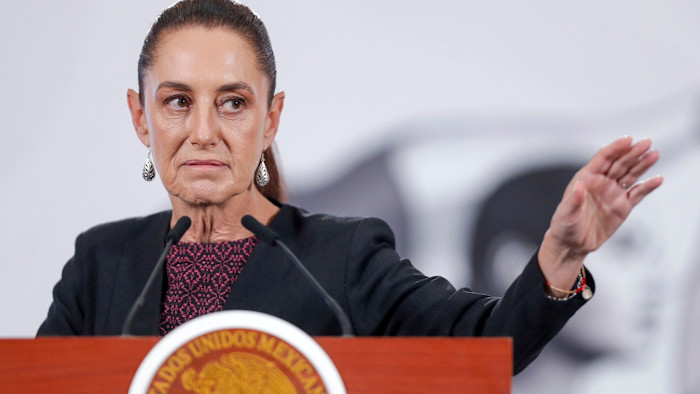
Mexico’s congress has rejected an electoral reform proposed by President Claudia Sheinbaum, delivering the leftist leader’s first big legislative defeat and intensifying friction within the ruling coalition.
The lower house voted 259-234 in favour of the bill on Wednesday, short of the two-thirds majority needed to approve a constitutional reform. It would have cut public funding for political parties and electoral authorities by 25 per cent and shrunk the number of seats in the senate.
The reform was the last in a series of substantial constitutional changes championed by Sheinbaum’s predecessor and mentor Andrés Manuel López Obrador. The former president argued that Mexican institutions had to be overhauled to stamp out corruption and serve the needs of ordinary people.
Critics argue that the changes, including a successful effort to replace the entire judiciary with elected judges, are designed to cement the power of the ruling Morena movement and recreate the one-party rule that dominated Mexico for seven decades until 2000.
Lawmakers from two smaller forces that are normally allied with Morena rejected the electoral reform.
The Workers Party and Green Party argued its measures, such as the elimination of a candidate list system used to elect some lawmakers via proportional representation, would hurt minority parties.
“We have always been against the establishment of a single party,” Workers Party spokesperson Reginaldo Sandoval said during the debate. “This is not the path that will lead us to greater democracy.”
Sheinbaum’s bill was a significantly scaled back version of electoral reforms that López Obrador proposed and failed to push through congress during his 2018-2024 government.
The failure to pass it “indicates turbulence within the ruling coalition”, said Edmundo Sandoval, a Mexico City-based associate director at consultancy Control Risks. “This starts the battle ahead of 2027 midterms elections.”
However, the congressional defeat may not wound Sheinbaum in the long-term.
The president said last week that she had a “Plan B” if the reform failed. Analysts said she would probably propose more technical changes to the political system that did not require a two-thirds majority. Morena holds 51 per cent of congress seats.
“She can still find ways to benefit her party, although she will be somewhat limited by the constitution,” said Carlos Ramírez, a partner at Mexican consultancy Integralia.
Polls suggest the bill’s focus on cutting funding for parties, election officials and campaigns was popular, with more than 80 per cent of respondents approving its core measures in a survey by researcher Enkoll for Spanish newspaper El País and local media.
Morena’s spokesperson Ricardo Monreal said during the debate that Sheinbaum had made a “commitment to the people” to reform elections and that “ideas born among the people end up becoming law sooner or later”.
Analysts said Sheinbaum would try to use the loss to her advantage in the midterms as well as in an internal battle with hardline factions inside Morena.
“This allows her to frame herself as being on the side of the people, which could be a political asset” within the populist Morena movement, said Sandoval.