
Anti-fur charity ACTAsia has spent two decades fighting to change the fashion industry – but now Gen Z’s booming #FurReal TikTok trend could ‘drag animal rights back decades’, warns charity founder PEI SU
Pei Su, founder of anti-fur charity ACTAsia, says : “As big fashion labels take to the catwalk for London Fashion Week this weekend, I am thankful that once again, there isn’t a single real fur trim in sight.
Anyone who has seen the horrors of fur farming first-hand as I have, would never dream of wanting fur to have a resurgence, yet that is what a growing number of celebrities and influencers are encouraging.
When London Fashion Week took the powerful step of going officially fur free in 2023, I celebrated, but never dreamt that just a few years later, some of the younger generation, who I often think of as the ones leading positive change, would be trying to give real fur a fresh lease of life.
Ensure our latest headlines always appear at the top of your Google Search by making us a Preferred Source. Click here to activate or add us as your Preferred Source in your Google search settings.
READ MORE: ‘Fur trade isn’t just a danger to animals – it could cause next horror pandemic’READ MORE: UK suffers first-ever case of ‘reverse zoonosis’ as experts issue urgent pandemic warning
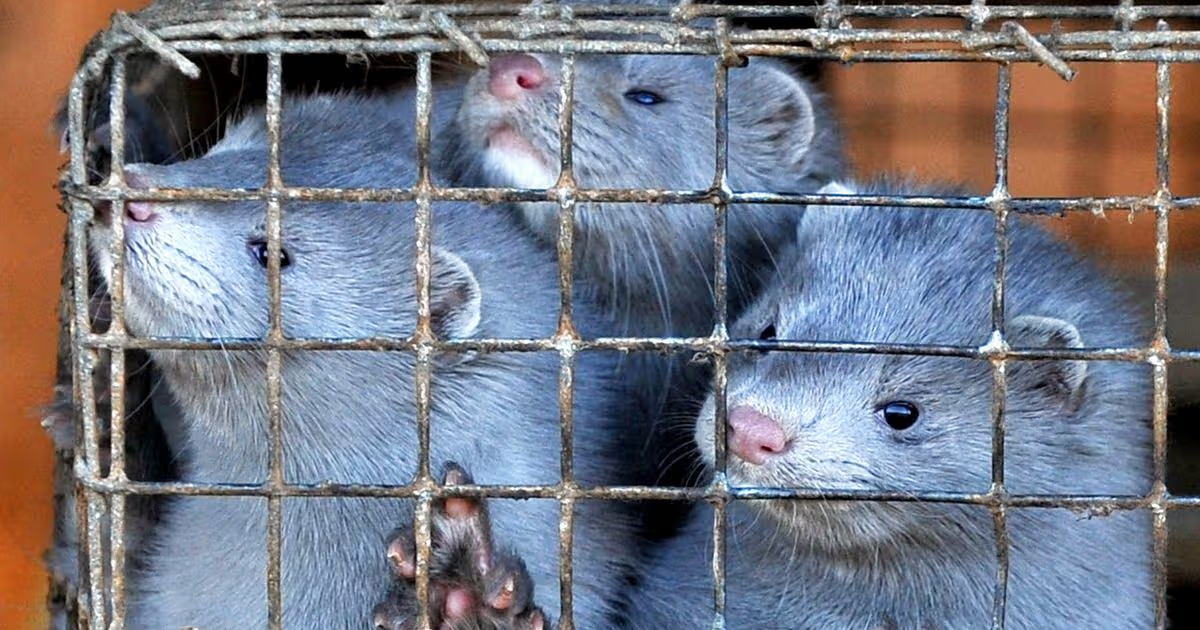
Through my work with my charity ACTAsia, I am well aware of the horror that is the fur industry, with tens of millions of foxes, mink, raccoon dogs bred and slaughtered each year. So imagine my horror to see so-called TikTok fashionistas, some of them with millions of followers, now giving airtime to fur. Then celebrities such as Kendall Jenner, Ice Spice and Rihanna have all stepped out in real fur in the past two years. Not exactly compassionate fashion.
Celebrities and influencers need to understand that fur farming is wrong on many levels. There is of course the appalling cruelty inflicted on animals, kept in tiny wire cages, killed via methods such as electrocution and gassing.
There is also the environmental impact of the intensely toxic and energy-consuming fur industry. As a comparison, the carbon footprint of producing 1kg of mink fur is 31 times that of cotton – how is that a good choice for our planet?
Then there are the global health implications. With so many animals crammed in together, who wouldn’t cross paths in the wild, and the human contact, fur farms are seen as high risk breeding grounds for pandemics.
One argument on social media is that vintage fur is good because it is ‘recycling’. I don’t agree. All it does is normalise fur, making it socially acceptable in a way it hasn’t been for decades, therefore fuelling demand.
While the UK can pride itself on having banned fur farms long ago (England and Wales in 2000, Scotland and N Ireland in 2002) it is a frustrating loophole that imports and sales are still allowed. Stores and designers such as Harrods and Louis Vuitton still sell furs in the UK. How can we really allow this if we believe the industry is wrong? Is it acceptable so long as the cruelty happens in another country, such as China, (the world’s largest producer of fur), Finland, or the US?
If Brits want to show they condemn fur, I would encourage them to throw their support behind a bill in the Houses of Parliament calling for the ban of import and sale of fur. Brought by MP Ruth Jones, it is due for a second reading on February 27.
A lot of ACTAsia’s work in changing the culture around fur focuses on China because of its role as a key supplier on the global stage. We want consumers and professionals to make informed choices by shining a light on the industry. Thankfully our biannual reports show that the number of fur farms in China are falling, but in 2024 there were still 10.76 million pelts produced.
Other positive steps have seen over 1600 of retailers around the world sign up to the Fur Free Retailers scheme, of which ACTAsia has recruited 112 in China.
LFW took a further step and banned exotic animal skins from 2024, and New York Fashion Week is fur free from September. Milan and Paris Fashion Weeks still allow big name brands such as Fendi to showcase fur, but have lost sponsorship and face growing opposition.
So while the UK is doing well on the catwalks this week, out on the street I am concerned we are seeing a different story. I would urge everyone to think carefully about their choices, before a return to fur drags the UK back several decades when it comes to animal rights.”
Pei is the founder and CEO of ACTAsia, a UN-backed NGO, focusing on increasing people’s compassion for animals, people and the planet. It is a leading expert on Chinese fur farms, thanks to its grassroots, on-the-ground investigations and biannual reports. For more on ACTAsia’s work, see www.actasia.org