Unlock the White House Watch newsletter for free
Your guide to what Trump’s second term means for Washington, business and the world
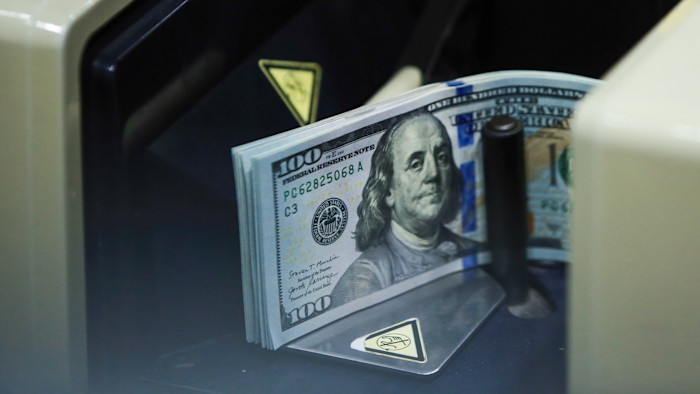
Fund managers are taking the most bearish stance on the dollar in more than a decade, as the currency bears the brunt of the damage from unpredictable US policymaking.
The dollar is down 1.3 per cent this year against a basket of peers including the euro and the pound — on top of a 9 per cent drop in 2025 — and is hovering close to a four-year low.
A Bank of America survey published on Friday said fund managers’ exposure to the dollar had dropped below last April’s nadir, when President Donald Trump spooked the world with sweeping tariffs.
The survey found that the managers’ positioning in the dollar was the most negative since at least 2012, the earliest year for which it had data.
The shift comes as Trump’s aggressive geopolitical actions and pressure on institutions such as the Federal Reserve have raised anxiety over the country’s attractiveness as a haven for the world’s capital.
Bets against the currency have outstripped positive wagers on the dollar so far this year, reversing the situation of the fourth quarter of 2025, according to options data from CME Group.
Big asset managers said the dollar’s slide reflected a growing desire by so-called real money investors such as pension funds to either hedge against further weakness or lower their exposure to dollar assets.
Bets on further dollar depreciation versus the euro, reflected in so-called risk reversals, have reached levels only previously seen during the past decade during the Covid-19 pandemic and after Trump’s tariff announcements last April.
“Some of the volatility over the past year has led investors to question the historically low [dollar] hedge ratios they have held on US assets,” said Roger Hallam, head of global rates at asset management giant Vanguard.
This reappraisal of US allocations and hedging positions was a “key driver” of the dollar’s recent drop, he added.
“We still see an environment where the dollar can weaken from here,” said Iain Stealey, international chief investment officer for global fixed income, currency and commodities at JPMorgan Asset Management, which has built up a bet against the dollar in recent weeks.
While US interest rates remain higher than other major economies such as the Eurozone and Japan, traders anticipate that the gap will narrow, with the Fed expected to cut rates twice this year.
Referring to the carry trade, which has until recently favoured the dollar because of its higher interest rate returns than other currencies, Stealey said: “[The dollar] is not as screamingly overvalued but we see an environment where the Fed keeps cutting . . . and the carry advantage erodes away over time.”
The nomination of Kevin Warsh as Fed chair, widely viewed as an orthodox candidate who could ease worries over the independence of the central bank, initially reassured many investors who had been concerned that a Trump loyalist could cut rates recklessly.
But the US president is already putting pressure on Warsh, telling NBC News this month that he “would not have gotten the job” had he been in favour of raising rates.
BofA analysts noted that Warsh’s nomination “did not translate into greater demand for the dollar nor renewed optimism on US assets”.
Expectations that some global investors could pull out of US assets were stoked in January by the Greenland crisis, when Trump threatened both military action and additional tariffs against Nato allies.
While US Treasury secretary Scott Bessent subsequently hit out at “this notion that Europeans would be selling US assets”, some managers indicated there had already been outflows.
“We are seeing increased repatriation flows as foreign US dollar holders move capital back to their home currency,” said Caroline Houdril, a multi-asset fund manager at Schroders.
Washington’s move last year to support the Argentine peso against the dollar, and its so-called rate check on banks’ yen-dollar rates last month, have stoked fears of a possible US plan to weaken the dollar.
The uncertainty was compounded by Trump’s comment in January that the drop in the currency was “great”.
The remarks prompted comments by Bessent that the administration was still pursuing Washington’s traditional “strong dollar policy” and was not planning any FX market intervention.
“There are plenty in and around the administration who think a weaker dollar would be helpful for US exports and the broader re-industrialisation push,” said Xavier Meyer, chief executive of investments at Aberdeen Group.
He added that this had been a factor in markets taking the prospect of a possible US-Japan FX intervention “so seriously”.