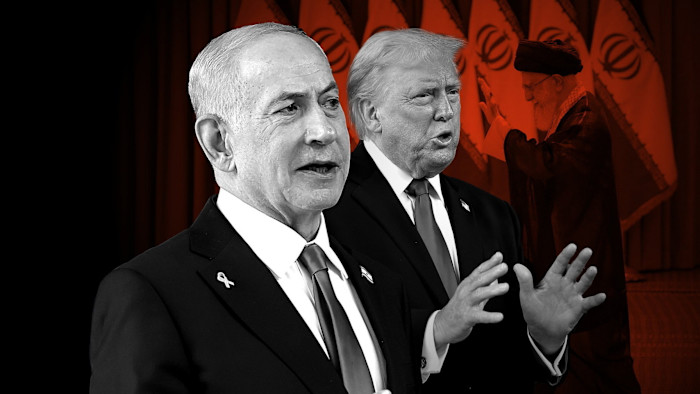
Donald Trump’s attempt to overthrow the Iranian regime a year after the start of his second term as president cements his transformation from a sceptic of intervention to an avid user of American power abroad.
It is a risky gambit. The prospect of the Iranian regime’s collapse could trigger unbridled retaliation by the remnants of its government, along with Tehran’s proxies and supporters around the world.
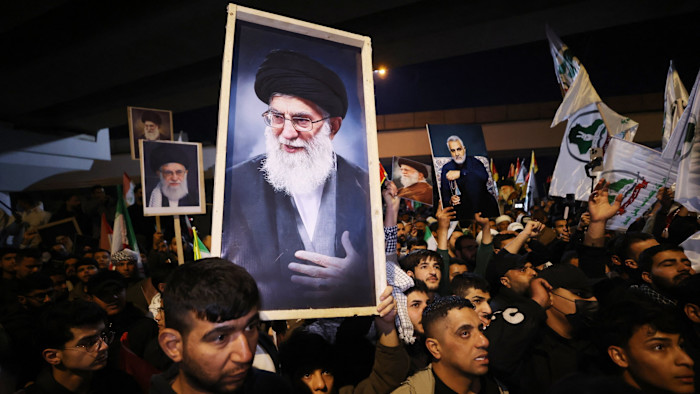
Trump on Saturday announced that Iranian supreme leader Ayatollah Ali Khamenei had been killed in the joint US-Israeli war on the Islamic Republic. Iran’s state television on Sunday confirmed he was killed in the strikes.
“This is the single greatest chance for the Iranian people to take back their Country,” Trump said, pointing to an event that is likely to reshape the Middle East, America’s relationship to the region and his legacy as US president.
It is unclear how, if the regime collapses, the Trump administration will manage a political succession in Iran, where opposition groups are weak and divided, without putting US forces on the ground.
Americans “should be under no illusion that people are going to run into the streets and topple the regime, and that this is going to be a ‘Take down this wall’ Ronald Reagan moment,” said one former US official.
“It is going to be really, really ugly and time consuming and expensive and complicated. And hopefully the American people are ready for this.”
The parallels with the US invasion of Iraq in 2003 will be as vivid in Washington as in the Middle East. Trump’s attempt to overthrow the Iranian regime — and his call for its citizens to rise up — evokes the toppling of Iraqi dictator Saddam Hussein, a military campaign long criticised by Trump.
But the US president has been increasingly willing to take big gambles in foreign affairs, defying traditional diplomacy and the sovereignty of America’s foes. Just two months ago, Trump ordered a military raid on Venezuela to capture strongman Nicolás Maduro and bring him to trial and gain control over the political leadership of the Latin American country.
In a Truth Social post, Trump expressed some hope that the remains of the Iranian regime would quickly adapt to a new reality. He called for the Islamic Revolutionary Guard Corps and the police to “peacefully merge with the Iranian Patriots, and work together as a unit to bring back the Country to the Greatness it deserves”.
He vowed US strikes would continue “as long as necessary”.
Trump’s announcement came after the US military said its strikes had struck at the heart of the regime’s security apparatus, including air defences, missile and drone launch sites, airfields and IRGC command and control facilities. In the early wave of the daytime attack, which involved dozens of strikes, US forces launched precision munitions from planes, warships and land. And, for the first time, they used cheap one-way drones modelled after Iran’s own Shahed drones.
The US military also said it had defended itself successfully from hundreds of Iranian missiles and drones launched at its regional bases. Damage to its installations was minimal, it added, and there were no reported troop casualties.
The Trump administration says the decision to attack Iran came less than a day before the strikes, and only after US negotiators had returned from their third round of recent talks with Tehran on Thursday, concluding that the Islamic Republic was determined to build a nuclear bomb.

While one rightwing, pro-Israel analyst, Gregg Roman, said the US and Israel had been coordinating a “sophisticated deception operation . . . over the past three weeks”, three senior Trump administration officials insisted on Saturday that they had negotiated in good faith and that it was Tehran that had refused the option of peace.
The administration believed that Iran was at such a “very weak point” following nationwide protests, with its economy “reeling”, and that it would be under significant pressure to meet US demands, the officials said in a call with reporters.
“We offered them many, many ways” to create a civil nuclear programme, one senior US official said. “But instead that was met with games, tricks, stall tactics.”
Ultimately, Trump determined “we could have made another short-term bad deal, but it wouldn’t have dealt with the long-term issue of Iran”, the official said.
Trump must now defy the disastrous US record of regime-change operations in the Middle East and north Africa, from Iraq to Afghanistan and Libya, stretching from George W Bush to Barack Obama.
Elliott Abrams, who served as Trump’s special representative for Iran and Venezuela during his first term, said the US president had “three rules” when it came to foreign intervention. First: military operations abroad should be “one and done — very quick attacks that are over when they’re announced”. Next: there should be “no American casualties”.

Trump has already broken those rules, or at least acknowledged that he is likely to, saying on Saturday that the US would probably suffer casualties as the assault on Iran continued.
But the third rule — no ground forces — is one that Abrams believes he will not break.
“I thought it was striking in Trump’s statement when he said to the Iranian people: now over to you. I think he was saying: ‘I’m going to damage the regime very, very badly, [but] I’m not sending troops in, so when I’m done it’s your responsibility’,” he said.