Donald Trump has upended US-China relations two weeks before a critical summit with Xi Jinping in Beijing by saying he might delay his first visit to the country in nine years as he grapples with the Iran war.
In an interview with the FT, the US president suggested that he “may delay” the trip. Several people familiar with the situation said China had been expecting the trip to proceed as recently as Friday.
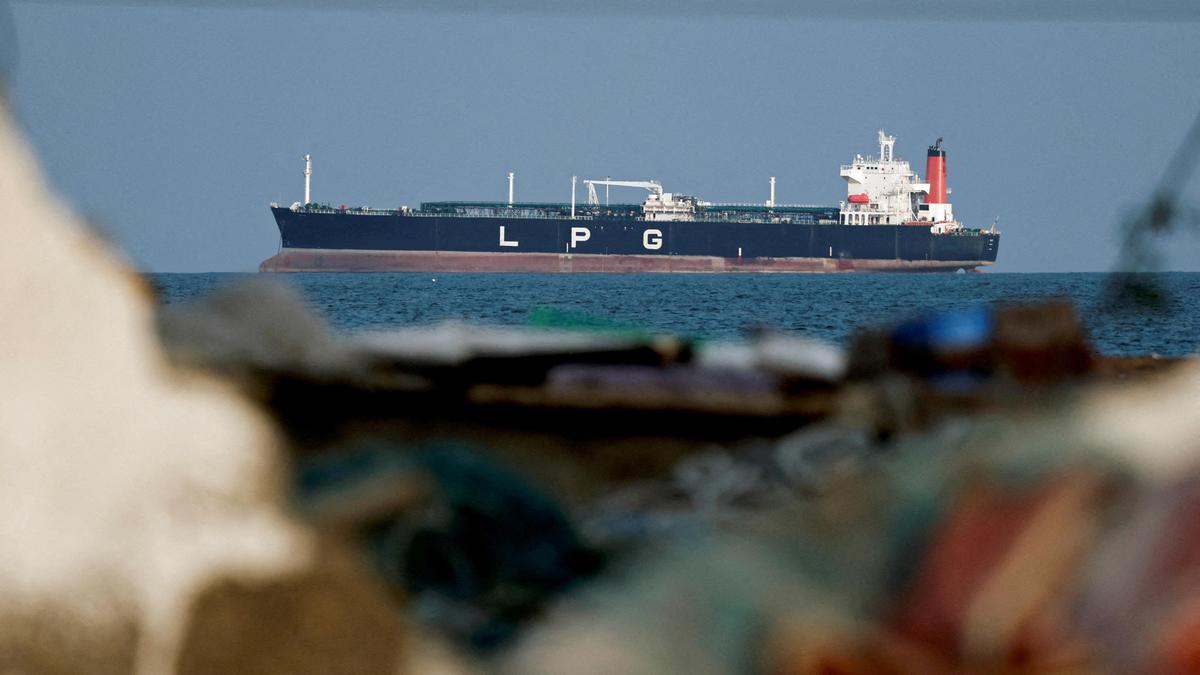
Trump’s comment comes as the White House remains concerned about the closure of the Strait of Hormuz, which is having a dramatic impact on the price of crude oil and sending petrol prices higher in the US.
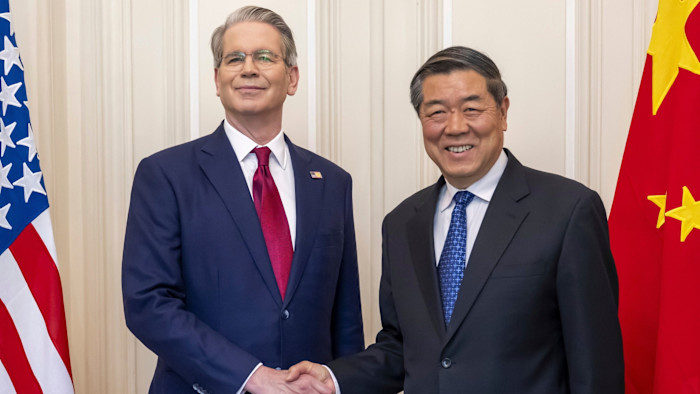
He spoke after his Treasury secretary Scott Bessent met his Chinese counterpart He Lifeng in Paris to iron out key details for the summit. Bessent is expected to hold more talks with He on Monday.
President Xi invited Trump to visit Beijing when the two leaders met in Busan, South Korea in October. China had shown no indication of wanting to postpone the meeting despite the conflict with Iran, from which it imports large amounts of oil.
Experts in China had suggested that Xi wanted to keep the visit on track because of the importance of using face-to-face meetings with Trump to maintain some stability in bilateral relations.
Sarah Beran, a China expert and former top US diplomat, said Beijing was prepared to proceed with the meeting even as it grappled with how to narrow gaps between Trump and Xi on the Iran conflict.
“If the US side decides to postpone until the end of hostilities — not cancel — Beijing would probably breathe a sigh of relief. It would not be forced to take a position or put on the spot,” said Beran, partner at Macro Advisory Partners.
“But a cancellation from Beijing’s view would be problematic — undermining the message of bilateral stability and rescheduling between the two leaders could take time.”
It was unclear if Trump floated a delay because US presidents tend to avoid overseas trips during times of conflict or if he was hoping that suggesting a postponement would pressure Beijing to send warships.
“If Washington thinks postponing would give the US leverage to press Beijing for a more active role in mediation, then I think Washington will be disappointed,” Beran added.
Dennis Wilder, a former top White House Asia official, said the possible delay reflected “serious consideration of the optics of being received with great fanfare in Beijing while American forces are in harm’s way”.
“This is particularly true because Beijing has come out against the US-Israel joint military action, has cut its own deal with the Iranians on tanker movements in the Strait of Hormuz and has not condemned Iran for its widening of the conflict to include the Gulf states, among others,” Wilder said.
Wilder added that, while Xi would be disappointed to lose an opportunity to cement the pause in the trade war reached in Busan, he “may also be somewhat relieved because the optic is negative of hosting the US president in spite of the fact that the Chinese public has been told repeatedly that the war is great power hegemonism”.
In the interview, Trump said China should help because the vast majority of its oil imports pass through the Strait of Hormuz. He suggested that waiting until the summit for an answer from Beijing might be too long.
Dong Wang, head of the Institute for Global Cooperation and Understanding at Peking University, said Beijing would oppose any effort to link the visit to China’s policies on the Iran war, including whether it sent ships to help secure the Strait of Hormuz.
“Practices of coercion and arbitrary linkage are not conducive to constructive communication,” he said.
Separately, Chinese state media ridiculed Trump’s request for help. “Is this really about ‘sharing responsibility’ — or is it about sharing the risk of a war that Washington started and can’t finish?” the Communist party’s nationalist tabloid Global Times said.
It cited calls by China’s foreign minister Wang Yi for the US, Israel and Iran to return to the negotiating table. “One thousand warships cannot achieve what one negotiating table can,” it said.
Evan Feigenbaum, an Asia expert at the Carnegie Endowment for International Peace, said that, after 10 years of US warnings about the need to constrain China, “we’re now in a bizarro world where the president actually appears to be begging Beijing for an expeditionary naval deployment”.
In the short term, he added, “Hormuz is not China’s problem — it is Trump’s problem and they have no obvious incentive to paint an Iranian target on their back, figuratively or literally.”
On Saturday, Trump called on several nations, including Japan, South Korea, France and the UK, to send warships to the strait to help reopen the waterway.
Trump previously said the US navy would escort oil tankers, but the situation is complicated because Iran retains the ability to threaten navy and commercial ships with fast boats, mines and drones.
He has also put pressure on Japan to send warships to the Strait of Hormuz, creating a tough situation for Prime Minister Sanae Takaichi, who will meet him on Thursday on her first visit to the White House.
In the interview, Trump called on allies to send minesweepers to the strait. Japan has advanced minesweepers but faces constraints on deploying them during a conflict because of its pacifist constitution.