
The Trump administration revoked a scientific finding that has been the central basis for US action to regulate greenhouse gas emissions and fight climate change
The Trump administration scrapped a scientific pledge that has long served as the cornerstone for US efforts to regulate greenhouse gas emissions and tackle climate change, marking the president’s most sweeping assault on environmental protections to date.
The rule finalised by the Environmental Protection Agency overturns a 2009 government declaration – known as the endangerment finding – that established carbon dioxide and other greenhouse gases pose a threat to public health and welfare. The endangerment finding made under the Obama administration forms the legal foundation for virtually all climate regulations under the Clean Air Act covering motor vehicles, power plants and other pollution sources contributing to planetary warming.
Legal battles are inevitable over a measure that abolishes all greenhouse gas emissions standards for cars and trucks, and could trigger a wider dismantling of climate regulations on stationary sources including power plants and oil and gas facilities, experts warn. Reversing the finding will “raise more havoc” than other Trump administration efforts to dismantle environmental rules, according to Ann Carlson, an environmental law professor at the UCLA School of Law.
EPA Administrator Lee Zeldin, who has steered the agency towards a business-friendly stance that has repeatedly rolled back climate regulations, declared the repeal of the endangerment finding “will be the largest deregulatory action in the history of America.” Environmental campaigners have branded the move as the most significant assault in American history on federal powers to tackle climate change.
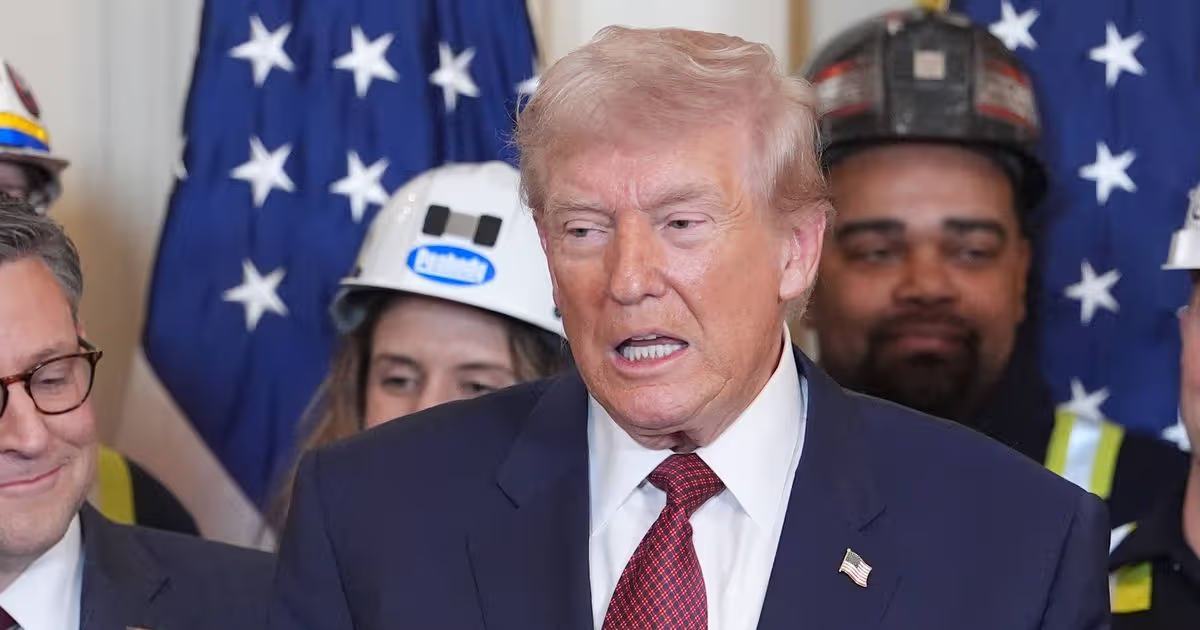
Zeldin unveiled the completed rule on Thursday standing alongside President Donald Trump. The EPA also revealed plans to propose a two-year postponement to a Biden-era regulation limiting greenhouse gas emissions from cars and light trucks.
Zeldin, a former Republican congressman who was selected by Trump to head the EPA last year, has been critical of his Democratic predecessors, arguing that in their efforts to combat climate change, they were “willing to bankrupt the country”.
Scrapping the endangerment finding “is the most important step taken by the Trump administration so far to return to energy and economic sanity’,’ said Myron Ebell, a conservative activist who has questioned the science behind climate change. The move “will make our economy more productive and benefit consumers, most immediately by allowing auto manufacturers to produce the vehicles that people want to buy,” he added.
The Supreme Court determined in a 2007 case that planet-warming greenhouse gases, produced by burning oil and other fossil fuels, constitute air pollutants under the Clean Air Act. Following the high court’s ruling, in a case referred to as Massachusetts v. EPA, courts have consistently dismissed legal challenges to the endangerment finding, including a 2023 judgment by the U.S. Court of Appeals for the District of Columbia Circuit.
The endangerment finding is widely recognised as the legal bedrock supporting a raft of regulations designed to guard against threats exacerbated by climate change. These include lethal floods, extreme heatwaves, devastating wildfires and other natural disasters in the United States and globally.
Gina McCarthy, a former EPA administrator who served as White House climate adviser in the Biden administration, branded the Trump administration’s actions as reckless. “This EPA would rather spend its time in court working for the fossil fuel industry than protecting us from pollution and the escalating impacts of climate change,” she stated.
McCarthy asserted that the EPA has a clear scientific and legal duty to regulate greenhouse gases, adding that the evidence supporting the endangerment finding “has only grown stronger” as the health and environmental risks posed by climate change have “become impossible to ignore.”
David Doniger, a climate expert at the Natural Resources Defense Council, said Trump and Zeldin are trying to use repeal of the finding as a “kill shot” that would allow the administration to make nearly all climate regulations invalid. The repeal could erase current limits on greenhouse gas pollution from cars, factories, power plants and other sources and could prevent future administrations from proposing rules to address global warming.
The EPA move comes after an executive order from Trump which instructed the agency to produce a report on “the legality and continuing applicability” of the endangerment finding. Conservatives and certain congressional Republicans have long campaigned to reverse what they view as excessively restrictive and economically harmful regulations limiting greenhouse gases responsible for global warming.
Zeldin and Transportation Secretary Sean Duffy have acted to dramatically reduce restrictions on tailpipe emissions from cars and trucks. Regulations introduced under Democratic President Joe Biden were designed to incentivise U.S. car manufacturers to produce and market more electric vehicles. The transportation sector represents the largest source of greenhouse gas emissions in the U.S..
The Trump administration unveiled a proposal in December to dilute vehicle mileage standards for the automotive industry, easing regulatory demands on car makers to control pollution from petrol-powered cars and trucks. The EPA stated its two-year postponement to a Biden-era regulation on greenhouse gas emissions by cars and light trucks will allow the agency time to formulate a plan that better reflects the reality of slower EV sales, whilst promoting consumer choice and reducing prices.
The mileage proposal would substantially decrease requirements that establish standards on how far new vehicles must travel on a gallon of petrol. Trump argued the rule change will reduce the cost of new cars and expand Americans’ access to the complete range of petrol vehicles they require and can afford.
Environmental campaigners warned the proposal would ensure polluting, petrol-guzzling vehicles remain on American roads for years ahead, putting the health of millions at risk, particularly youngsters and pensioners.
Clean car and lorry standards introduced under Biden represent some of the most crucial and impactful safeguards for tackling climate pollution, campaigners argue.