
Unlock the Editor’s Digest for free
Roula Khalaf, Editor of the FT, selects her favourite stories in this weekly newsletter.
British Airways has cancelled all flights into Dubai until at least June, in a sign the carrier expects disruption in the Gulf to carry on for months.
The airline said on Monday it would not fly to Dubai, Amman, Bahrain or Tel Aviv until after May 31, and Doha in Qatar until the end of April. Flights to Abu Dhabi will be cancelled until later this year.
This is the longest major airline cancellation announced so far in the conflict, which has entered its third week. European rivals Air France and Lufthansa have announced cancellations until later this month.
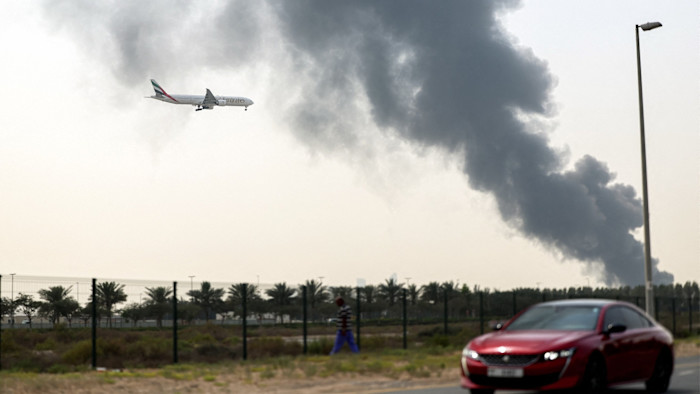
BA’s decision comes hours after Dubai’s main airport was forced into a seven-hour closure early on Monday when a drone attack caused a fire at a nearby fuel tank.
The airline Emirates was forced to reroute flights in mid-air, with services from Heathrow, Edinburgh, Manchester and Dublin among those forced to return to their original departure point.
Carriers based in the region have been increasing services in an attempt to return stranded passengers, using narrow air corridors that are patrolled by military jets.
However, none of the major European airlines has resumed flights to Dubai, with Virgin Atlantic pulling its resurrected service after only a few days.
BA had cancelled its services until later this month, but on Monday said it had extended the period “due to the continuing uncertainty of the situation in the Middle East and airspace instability”.
It will continue to fly to Riyadh and Jeddah in Saudi Arabia, which have been less affected by the airspace closures.
At Dubai’s main airport — which was the busiest international airport before the war — flights were suspended from about 6am local time after the fire.
Dubai International gradually resumed flights to select destinations later in the day. No injuries were reported from the fire, which authorities said had been brought under control earlier in the day.
Iranian drone attacks have been decreasing in frequency in recent days but have hit strategically important targets such as the airports, ports and buildings in Dubai’s financial centre.
The drone strike came as Dubai’s airlines had been increasing passenger capacity and restarting destinations to return stranded travellers and resume normal operations. Tens of thousands of passengers had been stranded in the region at the outbreak of fighting.
Emirates on Sunday reached its highest number of services since the outbreak of the war, with 369 flights, about 70 per cent of its pre-conflict levels. Etihad, which operates from Abu Dhabi, passed 100 flights for the first time on Sunday, data from Flightradar24 showed.
Qatar Airways said it would increase the number of flights from Wednesday, despite its airspace still being closed. “The number of flights that can operate each day is extremely limited under the current operational conditions,” it said. It listed several dozen new destinations including Singapore, New York, Tokyo and Amsterdam.
Flights in the region have been operating through narrow corridors of airspace, patrolled by local fighter jets. “Each flight requires careful planning and remains subject to regulatory approvals and airspace conditions,” Qatar added.
The airline has also been running select services between destinations outside the Gulf, bypassing its central base in Doha.
The flights — which require special approval from airports because they break with normal air travel rules requiring airlines to fly in or out of their home market — have allowed the carrier to repatriate some of the tens of thousands of passengers stranded when its regular Doha flight connections were cancelled.
Other airlines have also added flights between Asia and Europe in an attempt to return passengers. BA said it had added extra services to Singapore and Bangkok to bring passengers back, and would continue to review options to return more customers.