Liquefied petroleum gas (LPG) refill bookings have declined to about 77 lakh from 88.8 lakh earlier, indicating some easing of panic buying, even as the government said there is no shortage of petrol, diesel or cooking gas, and supplies remain stable despite the West Asia conflict.
All domestic “refineries are operating at high capacity and maintaining adequate crude oil inventories,” the update said. “The country remains self-sufficient in the production of petrol and diesel, requiring no imports of the fuels to meet domestic demand.” Oil marketing companies have reported no dry outs at fuel retail outlets or LPG distributorships, and petrol, diesel and LPG supplies are being maintained regularly.
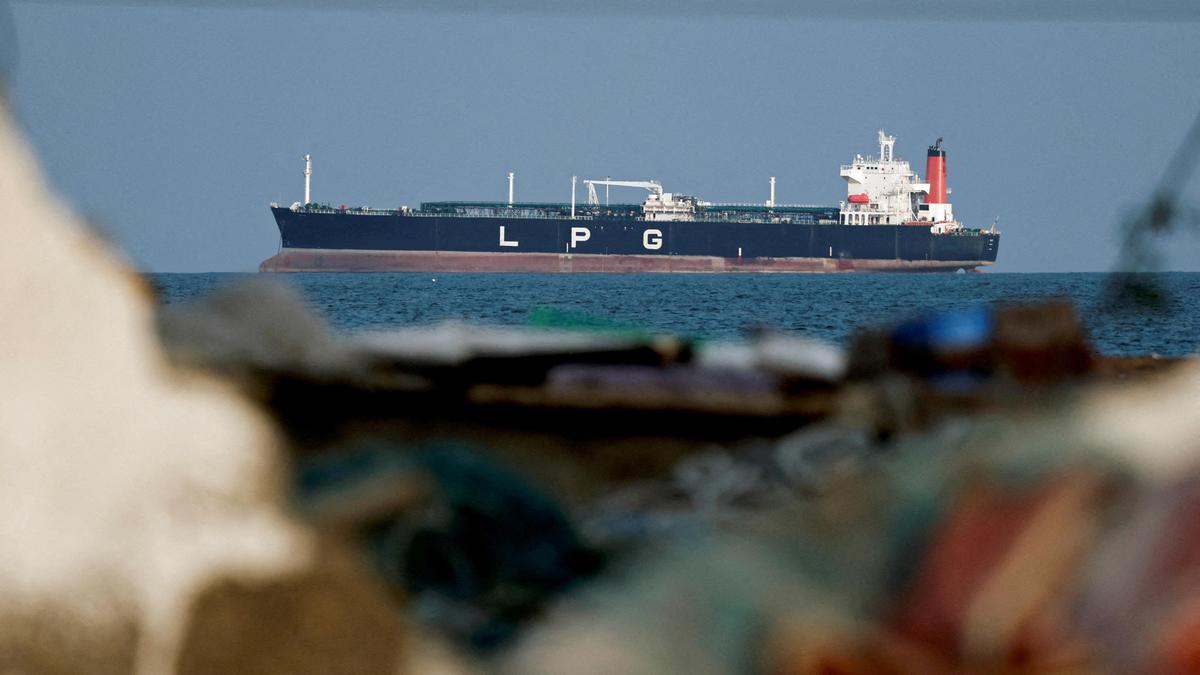
Meanwhile, an Indian-flagged crude tanker sailed out safely from Fujairah in the United Arab Emirates after loading 80,800 tonnes of Murban crude oil, despite an attack on the oil terminal. The vessel, Jag Laadki, departed Fujairah at 10.30 a.m. IST and is bound for India, with all crew members safe, the government said. Jag Laadki is the fourth Indian-flagged vessel to have come out of the war zone unharmed. On Saturday (March 14, 2026), two Indian-flagged LPG carriers — Shivalik and Nanda Devi — carrying about 92,712 tonnes of LPG crossed the war-hit Strait of Hormuz.
In its daily update on the impact of the West Asia situation, the government said the share of online LPG bookings has risen to about 87% from 84%, attributing the increase to a campaign by oil marketing companies promoting digital booking and discouraging people from queuing up at LPG dealerships for panic purchases.
“LPG bookings have shown a decline, with about 77 lakh bookings recorded yesterday [on Saturday] compared to 88.8 lakh bookings on March 13, 2026,” the update said, adding, “Online LPG cylinder bookings have increased from 84% to about 87%.” The government said it continues to prioritise the interests of domestic consumers and ensure uninterrupted LPG supply, particularly for households and priority sectors such as hospitals and educational institutions.
Several States and Union Territories, including Bihar, Delhi, Haryana and Rajasthan, have issued orders for allocation of non-domestic LPG in line with government guidelines.
State governments are undertaking enforcement measures to prevent hoarding and black marketing of petrol, diesel and LPG.
Raids are being carried out in several States, including Andhra Pradesh and Bihar, to check hoarding and black marketing of LPG cylinders.
Officials of PSU Oil Marketing Companies are also conducting surprise inspections at LPG distributorships to ensure smooth supply and prevent irregularities.
“Citizens are advised not to resort to panic buying as adequate stocks of petrol and diesel are available across the country,” the update said.
Priority sectors continue to receive protected natural gas supplies, including 100% supply for piped natural gas (PNG or natural gas piped to household for cooking purpose) and compressed natural gas (CNG), while supplies to industrial and commercial users have been regulated at about 80%.
Commercial LPG cylinders have been placed at the disposal of State governments for priority distribution and are now available in 30 States and Union Territories, while authorities have stepped up raids and inspections to curb hoarding and black-marketing, it said.
The government has also amended the LPG Control Order to mandate that consumers with PNG connections surrender domestic LPG connections, while domestic LPG production from refineries has been maximised and booking intervals rationalised to ensure equitable distribution, it said.
Domestic LPG production from refineries has been maximised, and several supply and demand-side measures have been implemented.
PSU oil marketing companies are promoting digital bookings, discouraging panic bookings and keeping LPG distributorships open on Sundays to facilitate smooth supply.
“Citizens are advised not to panic as the government remains committed to maintaining adequate LPG availability for households and essential sectors,” it said. “Consumers are requested to avoid panic bookings, use digital booking platforms and avoid unnecessary visits to LPG distributors.” Citizens are encouraged to opt for alternate fuels such as PNG wherever possible.
“The government continues to maintain coordination among the concerned Ministries and agencies and is taking necessary steps to ensure preparedness across key sectors and safeguard national interests,” it added.
The government also said it is closely monitoring the situation in West Asia while ensuring stable fuel supplies and maritime safety. Jag Laadki left Fujairah on Sunday (March 15, 2026), while Shivalik is due to reach Mundra port in Gujarat on March 16, and Nanda Devi would dock at Kandla port on March 17, according to the update.
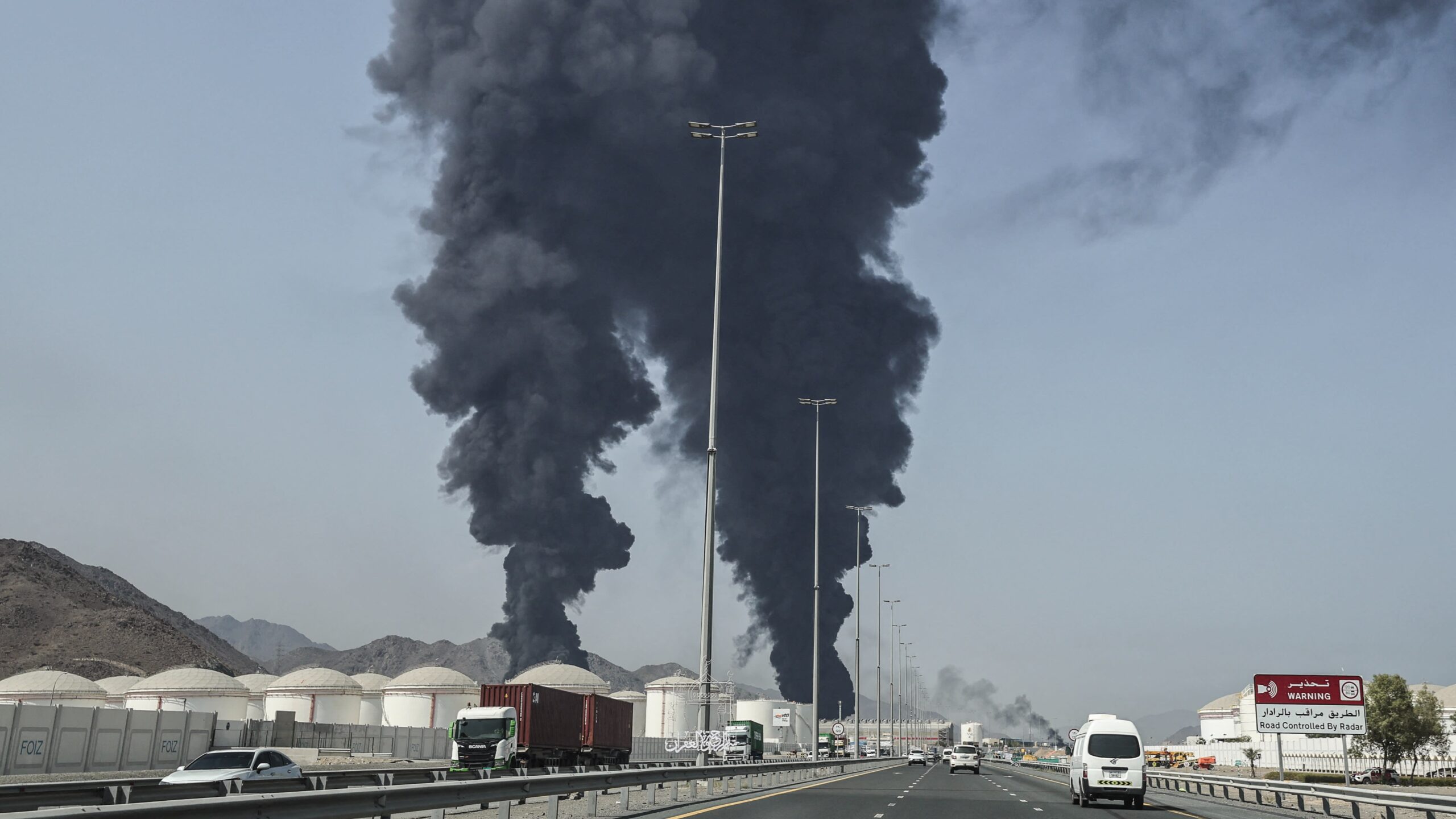
“On March 14, 2026, while the Indian-flag vessel Jag Laadki was loading crude oil at the Fujairah Single Point Mooring, the Fujairah oil terminal was attacked. The vessel sailed safely from Fujairah at 1030 hrs IST today [Sunday] carrying about 80,800 tonnes of Murban crude oil and is bound for India,” the update said. “The vessel and all Indian seafarers onboard are safe.”
Shivalik and Nanda Devi were among the 24 ships that were stranded on the west side of the strait since the war broke out in the region. Besides the 24 on the west side of the strait, four others were stranded on the east side. One of the four on the east side, an India-flagged oil tanker, Jag Prakash, carrying gasoline from Oman to Africa, crossed the war-hit strait on Friday (March 13, 2026).
Jag Prakash loaded gasoline from Sohar port in Oman and is now headed to Tanga in Tanzania. It is due to reach Tanga on March 21.
The government said Indian vessels and seafarers operating in the region remain safe, and maritime operations are being closely monitored. At present, 22 Indian-flagged vessels with 611 seafarers remain on the west side of the Persian Gulf region.
India imports about 88% of its crude oil, 50% of its natural gas and 60% of its LPG needs. Before the U.S.-Israel strikes on Iran on February 28 and Tehran’s retaliation, more than half of India’s crude imports, about 30% of gas and 85%-90% of LPG imports came from West Asian countries, such as Saudi Arabia and the UAE.
While India has partly offset crude supply disruptions by sourcing oil from countries, including Russia, gas supplies have been curtailed to industrial users and LPG availability to commercial establishments, such as hotels and restaurants, has been reduced.
“The Directorate General of Shipping continues to monitor the situation in coordination with ship owners, RPSL agencies and Indian Missions,” the update said. “Since the activation of the DG Shipping Control Room, 2,995 phone calls and more than 5,357 emails have been handled from seafarers, their families and maritime stakeholders seeking information and assistance.” DG Shipping has facilitated the safe repatriation of 276 Indian seafarers from the Gulf region so far, including 23 repatriations in the past 24 hours from airports and regional locations.
Ports across the country are closely monitoring vessel movements and cargo operations in view of the evolving maritime situation.
The Ministry of Shipping continues to coordinate with the Ministry of External Affairs (MEA), Indian Missions, shipping companies and maritime stakeholders to ensure the safety and welfare of Indian seafarers while maintaining the continuity of maritime trade and port operations, the update said.
The MEA is closely monitoring the situation in West Asia and assisting Indian nationals in the region through missions operating round-the-clock helplines. Around 1.94 lakh passengers have returned to India from the region since February 28, it added.