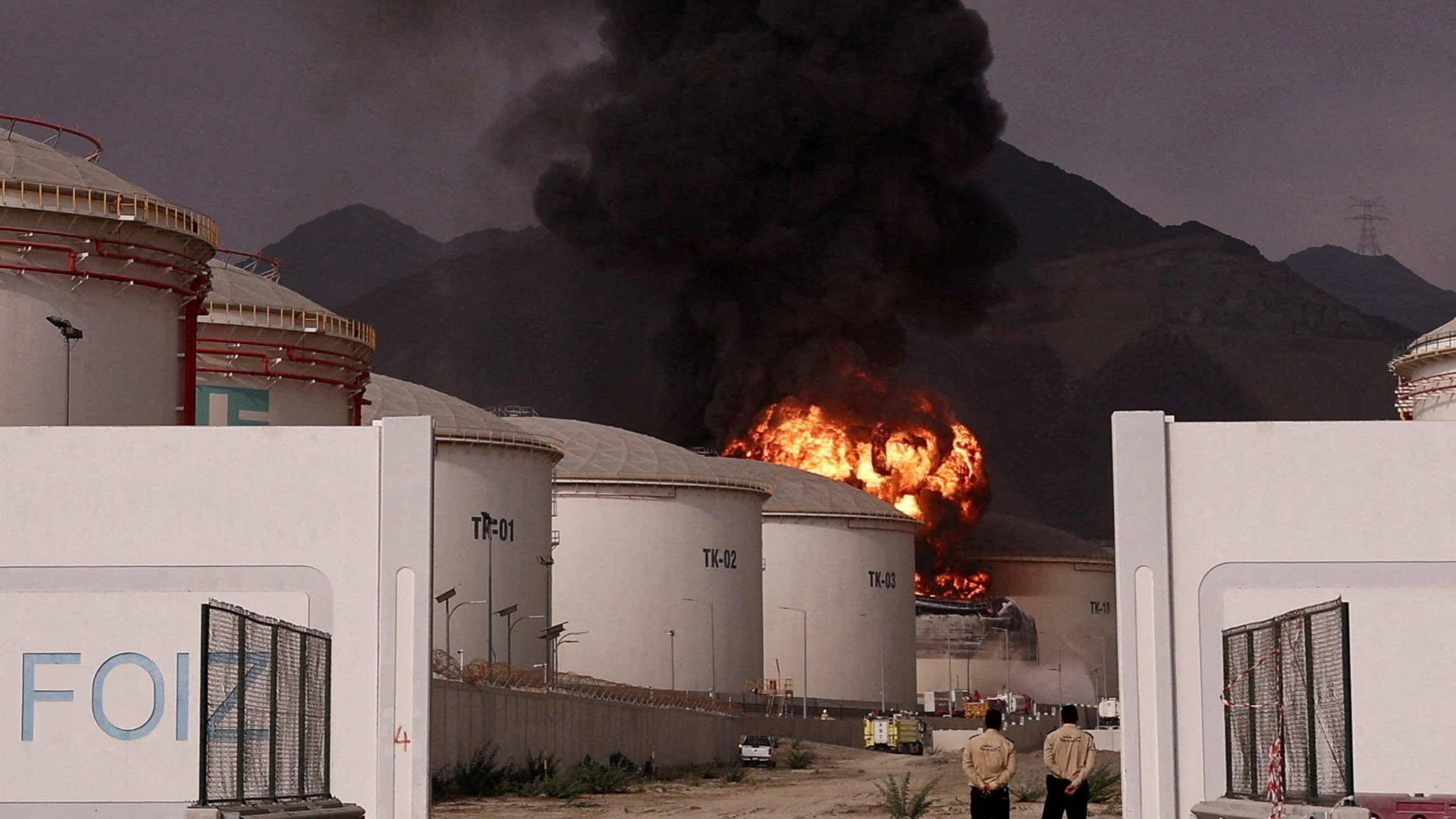
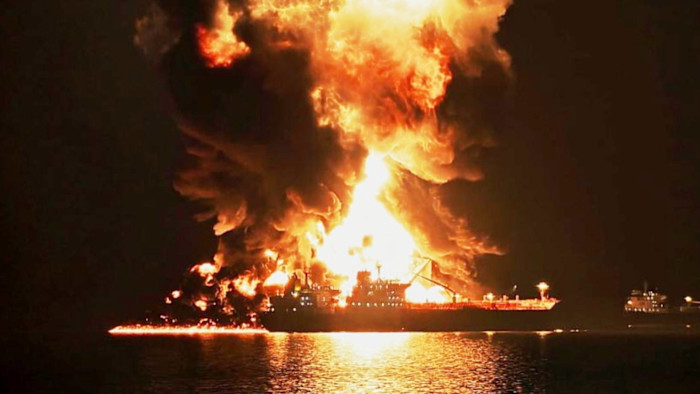
Oil tanker owners fear their vessels have become “sitting ducks” trapped in the Gulf as Iran extends its attacks on shipping, with little prospect of naval escorts commencing in the coming weeks.
Two tankers were hit off the coast of Iraq in the early hours of Thursday, setting them ablaze, with one crew member killed. The attacks on the vessels, chartered by London-headquartered trading house Vitol, brought the total number of vessels struck in the past 36 hours to five, with Iran increasingly targeting tankers across the Gulf.
The attacks are adding to fears and frustration after US President Donald Trump promised to establish naval escorts to reopen the Strait of Hormuz, the narrow chokepoint at the entrance to the Gulf through which about a fifth of the world’s oil and liquefied natural gas normally flows.
US energy secretary Chris Wright said on Thursday, however, that escorts were unlikely to begin until the end of the month, and tanker operators are increasingly sceptical they will be effective given Iran’s ability to strike vessels across the Gulf.
One tanker industry executive warned on Thursday that tankers sat in the Gulf waiting for safe transit were now “sitting ducks . . . we’re going to get a situation now where they’re popping one after another”.
Matthew Wright, a shipping specialist at Kpler, said that tanker owners were “stuck between a rock and a hard place”.
“They know Iran has directly threatened to attack vessels transiting the strait, so that is considered the most risky option,” Wright said.
“But staying in the Middle East Gulf is not safe either.”
Since the start of the war Iran has threatened any vessel that dared transit the Strait of Hormuz, but now appears to be widening its attacks, gambling that a prolonged disruption to the oil market could force the Trump administration to back down.
Iran’s new supreme leader Mojtaba Khamenei on Thursday called for the strait to “remain closed” in a written statement, in his first public comments since succeeding his father.
At least 18 commercial vessels have been hit since the start of the war, with about 110 tankers stuck in the Gulf.
Erik Hånell, chief executive of Stena Bulk, whose US-flagged tanker was struck in the port of Bahrain on March 1, said he doubted the US would soon be able to provide safe passage.
“The promise that we can go [be escorted through the strait], I don’t see that happening any time soon,” Hånell said.
He added the industry was getting “very limited feedback” from government authorities but that he feared national navies “simply cannot guarantee secure passage, not even close to secured passage, at this stage”.
Trump has also riled tanker owners by urging them just to brave the journey out of the Gulf, saying they should “use the strait” on Wednesday, as he touted US attacks on what he called Iranian “mine ships”.
Martin Kelly, at maritime intelligence group EOS Risk, said that compared with the 1980s “tanker wars”, however, Iran now had a range of weapons that could be used simultaneously, including both seaborne and airborne drones and ballistic missiles.
The tanker industry executive said shipowners were growing “frustrated” but acknowledged risks to naval vessels, describing them as “missile magnets” for Iran.
“We were promised that the navy will escort us, get told everything is OK, but the navy will not even put a ship into the area as it’s too unsafe for them,” the executive said.
“Yet the politicians expect the unarmed civilians to make their own way through the war zone.”
The US is keen to see shipping resume rapidly as the White House battles to keep the price of oil down, though Trump’s public position has vacillated.
On Thursday he posted on Truth Social that the US would “make a lot of money” when oil prices go up as it is the world’s largest producer.
“Of far greater interest and importance to me, as President, is stopping an evil Empire, Iran, from having Nuclear Weapons, and destroying the Middle East,” Trump wrote.
French President Emmanuel Macron has also floated the idea of a French naval escort but said that this could happen only when the conflict had subsided.
Kaja Kallas, the EU’s chief diplomat, said that while discussions were ongoing with EU capitals about changing the scope of the EU’s naval protection mission in the Red Sea to also include the Strait of Hormuz, she was not confident that participating countries in the Aspides programme would agree.
“My question to the [foreign and defence] ministers is: are you willing to change the mandate of these operations?” she told the FT.
“This is under discussion and . . . I’m not sure that the answer is going to be yes.”
Additional reporting by Leslie Hook in London and Eleni Varvitsioti in Athens
Cartography by Steven Bernard