Stay informed with free updates
Simply sign up to the Chinese trade myFT Digest — delivered directly to your inbox.
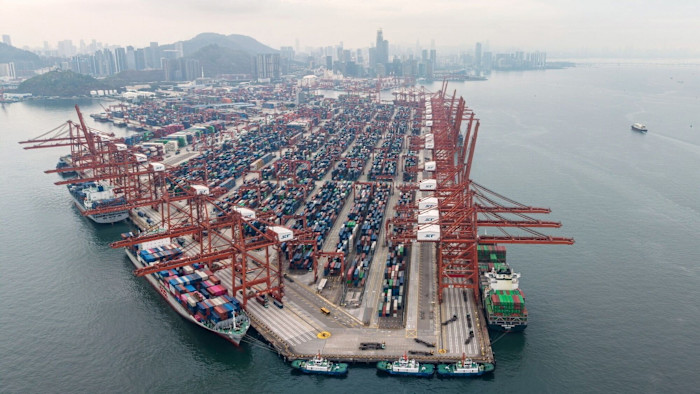
China’s exports surged 21.8 per cent year on year in dollar terms in January and February, putting the world’s second-largest economy on course for another year of record trade surpluses weeks before Donald Trump and Xi Jinping are set to meet in Beijing.
Export growth in the first two months of the year far exceeded the median forecast of 7.1 per cent from a Reuters survey of analysts and the 6.6 per cent increase in December.
Imports soared 19.8 per cent in January and February, compared with a forecast of 6.3 per cent and 5.7 per cent growth in December. The figures put China’s trade surplus for the first two months of 2026 at a record $213.6bn, up 25.3 per cent on the same period a year earlier.
The strong growth will only heighten concerns among China’s trading partners that a flood of low-cost goods is putting their factories out of business, although economists said it was encouraging that imports also rose rapidly.
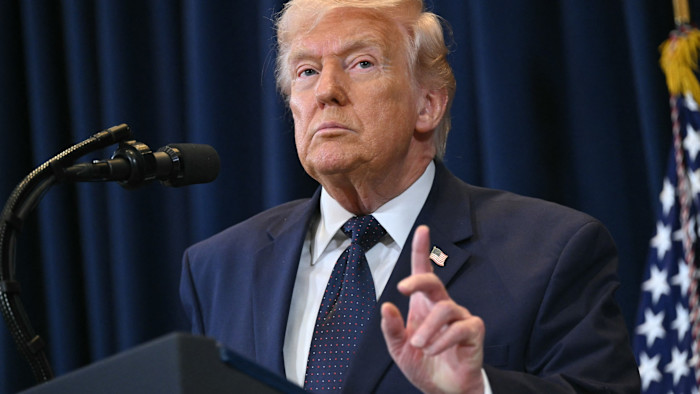
China’s trading practices are a particular point of contention for Trump, who is set to arrive in Beijing at the end of March for a critical meeting with Xi. The US president’s trade war failed to put a dent in China’s surplus, which hit a record $1.2tn last year.
“The positive takeaway for China’s trading partners should be rather than only seeing solid exports, imports also saw strong growth,” said Lynn Song, chief China economist at ING. “That shows that China’s comments of boosting imports this year aren’t just empty words.”
Chinese policymakers have over the past year insisted on the importance of strengthening consumption, which has lagged amid weaker household confidence and has helped drive prices lower.
The surge in exports in January and February was mainly due to shipments to south-east Asia, which increased 29.4 per cent, and to the EU, up 27.8 per cent.
Exports to the US fell 11 per cent while imports from the US dropped 26.7 per cent. Economists say, however, that much of China’s exports to south-east Asia make their way to the US as part of efforts to reduce exposure to tariffs.
Shuang Ding, Standard Chartered chief China and North Asia economist, said exporters may have rushed out shipments destined for the US after fears that a recent Supreme Court blow to Trump’s “reciprocal” tariffs could lead to the administration raising levies under alternative trade rules.
He also pointed to a surge in semiconductor prices on the back of the AI boom. “Both exports and imports of integrated circuits skyrocketed, consistent with trade data from Korea and Taiwan,” Ding noted.
On the imports front, Ding said one factor could be an increase in crude oil shipments “in anticipation of escalation of geopolitical risks”. China is the world’s largest oil importer, and the US-Israeli war in Iran has disrupted crucial energy shipments through the Gulf this month.
Analysts said China’s yawning trade surplus would only be reined in if Beijing resolved its years-long property slowdown and boosted domestic demand to help soak up excess production.
“The root cause of the enormous trade imbalance is China’s weak domestic demand and deflation amid the bursting of its property bubble,” said Nomura economist Ting Lu in a report ahead of the trade figures.
Carlos Casanova, an economist at UBP in Hong Kong, said it was possible that export growth would slow this year given frontloading last year, but cautioned that shipments were not going to “fall off a cliff”.
He added: “There are in many cases no alternative to Chinese goods. No matter the political noise I think it’s going to be very hard to replace the Chinese supply.”
Data visualisation by Haohsiang Ko in Hong Kong