Unlock the Editor’s Digest for free
Roula Khalaf, Editor of the FT, selects her favourite stories in this weekly newsletter.
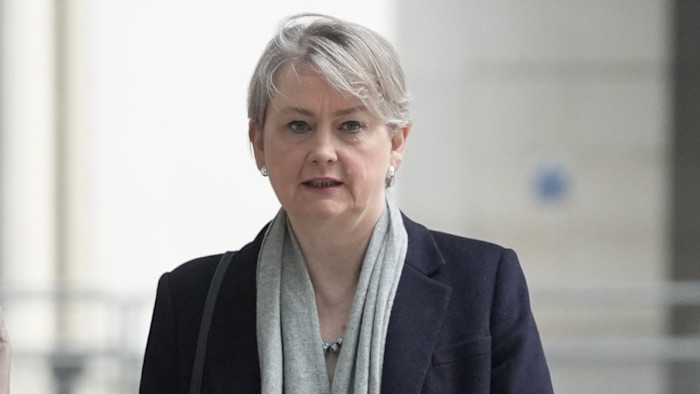
Foreign secretary Yvette Cooper defended the UK government’s decision not to get involved in the initial strikes on Iran in spite of fresh criticism from Donald Trump, saying lessons needed to be learnt from the Iraq war.
The US president attacked the UK in a Truth Social post overnight, accusing Britain of seeking to “join wars after we’ve already won” and said a British aircraft carrier was not needed after the Ministry of Defence began preparations for a potential deployment.
Cooper told Sky News that people needed to “focus on the substance and not social media posts”, as she pushed back against claims the UK’s special relationship with the US was fraying.
“We disagreed on a series of issues,” she said, adding that “Keir Starmer’s style of doing politics is obviously very different, and I think that kind of calm, cool-headed approach to these big, serious international issues . . . is right”.
Starmer is facing criticism from both the left and right over his handling of the war, even though his position is broadly in line with the British public and large swaths of his own MPs who have been scarred by previous military interventions in the Middle East, most notably the 2003 Iraq war.
Only 8 per cent of Britons backed the UK getting directly involved in the war, according to a recent poll by research company YouGov.
Zack Polanski, leader of the leftwing Green Party, which beat Labour in the Gorton and Denton by-election last week, has urged Starmer to condemn the conflict and stop the US using British air bases to launch strikes.
Meanwhile, Conservative leader Kemi Badenoch and Reform UK leader Nigel Farage have hit out at Starmer’s refusal to let Trump use those bases for the initial strikes against Iran. He has also faced criticism for the two-week delay in deploying a British warship to the region.
HMS Prince of Wales, one of Britain’s two aircraft carriers, is being prepared to set sail within the next five days although no final decision has been made as to whether it will be deployed, according to people briefed on the matter.
Former Labour prime minister Sir Tony Blair is reported to have joined criticism of Starmer’s decision not to join the US during its initial attack on Iran at a private event on Friday, saying that “if they are your ally and they are an indispensable cornerstone for your security . . . you had better show up when they want you to”.
A person close to Blair said that, in reference to the US request to use UK bases for refuelling, the former prime minister told the event that “it’s not like, as we did in Iraq, sending thousands of British troops, so I just think you’ve got to make the argument to the public”.
Cooper said she “disagreed” with Blair’s reported remarks, adding that the UK needed to “learn some of the lessons of what went wrong in Iraq”. Blair’s decision to take the UK into war with Iraq is widely seen as one of the most damaging decisions of his premiership.
“There are some people in politics who think that we should always agree with the US whatever [the circumstances]. There are other people in politics who think we should never take action with the US again whatever the circumstances. I don’t think either of those positions is in the UK national interest,” Cooper said.
Ministers argue that getting involved in the initial attacks on Iran by the US and Israel was not in the UK’s national interests, but it was right to protect partner countries in the Gulf when they were under attack, including allowing the use of UK military bases.
In an op-ed for the Mirror on Saturday, Starmer wrote: “While opposition parties seek to undermine Britain on the world stage, my Labour government is focused on protecting British people at home and abroad.”