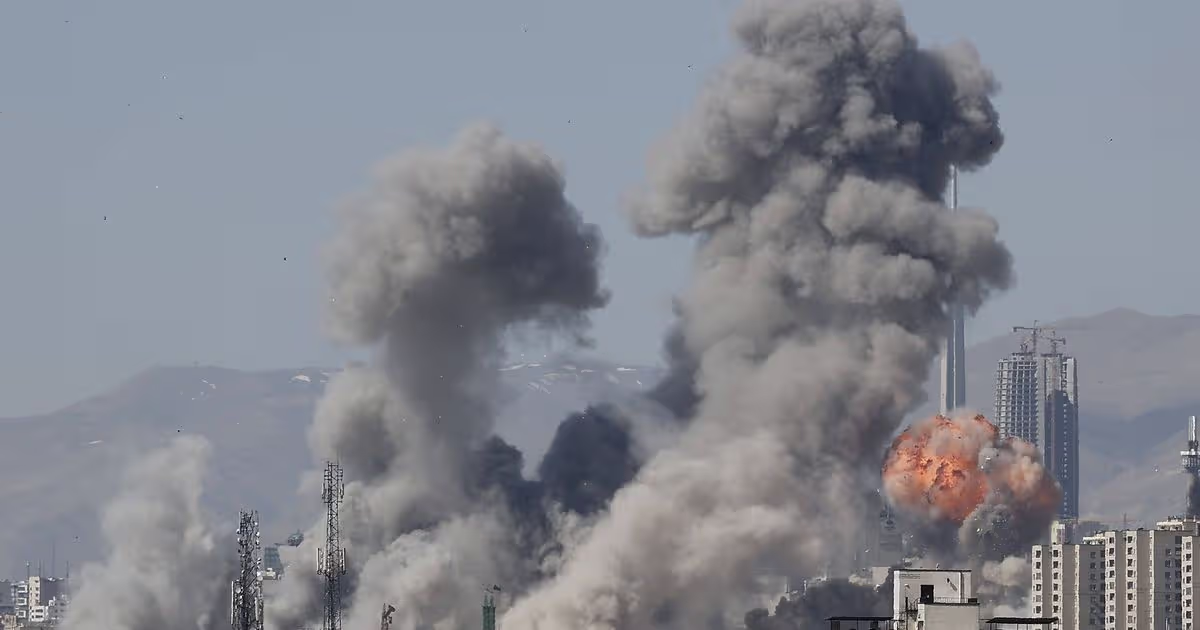
On Saturday morning the US and Israel launched joint strikes on Iran, killing the Supreme Leader Ayatollah Khamenei and a number of senior Tehran officials. Iran retaliated with drone and missile attacks on Israel and on Bahrain, Dubai Qatar, Kuwait and the United Arab Emirates – nearby countries with close ties to the US.
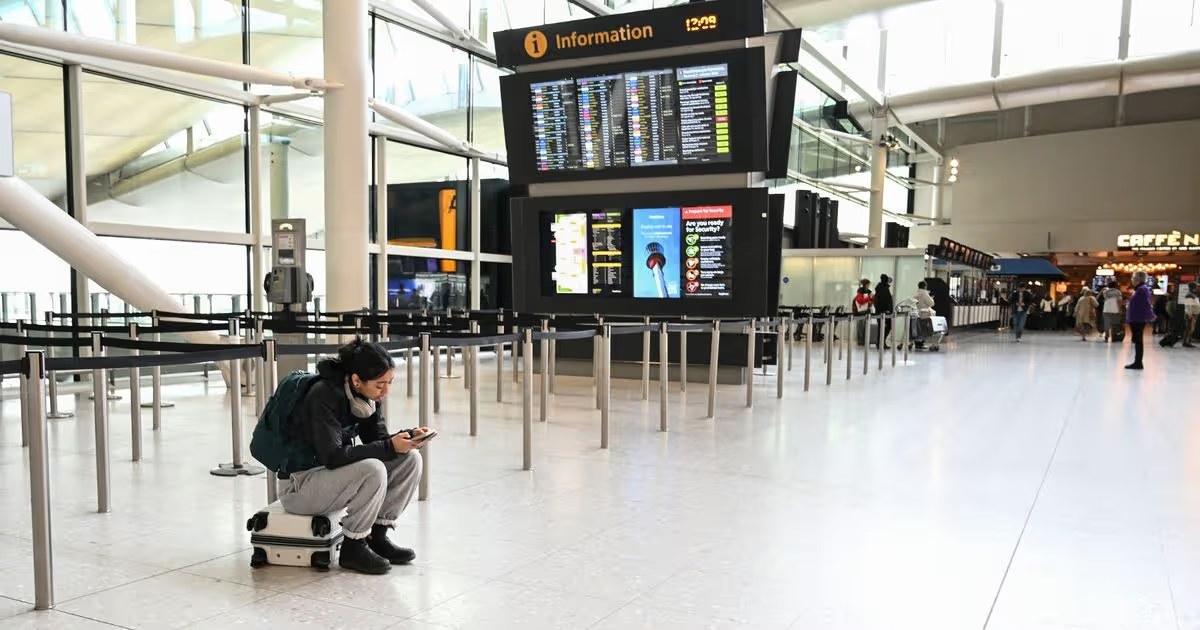
A runway at RAF Akrotiri in Cyprus was hit by an Iranian drone and UK families of servicemen and women working there are being evacuated. The UK has now given permission to the US to launch attacks from British bases – having earlier refused to do so. Close to 94,000 British citizens are now stranded across the Middle East and the Foreign Office is launching a huge operation to help them to safety.
Ensure our latest headlines always appear at the top of your Google Search by making us a Preferred Source. Click here to activate or add us as your Preferred Source in your Google search settings.
Oil prices have soared and the crisis has sent shock waves around the world as Tehran lashed out in response, drawing much of the MIddle East region into the flare-up. Soon after strikes landed in cities across Iran, US President Donald Trump announced that the country’s Supreme Leader had been killed.
He called it “the single greatest chance for the Iranian people to take back their country.” The news was later confirmed by presenters on Iranian state TV channels and 40 days of mourning was announced as Tehran set about selecting a new leader.
READ MORE: Death toll of Ian strikes so far as US continues combat operations and more countries are hit


But in the hours that followed the crisis escalated even further, a school in Iran hit in strikes, killing close to 150 girls. Sepearatley nine people werer killed in a single strike in Israel. The building housing the girls’ school was next to an Islamic Revolutionary Guard Corps centre.
Three American service members have been killed in Iran’s retaliatory strikes and Trump has warned there may be more deaths and wounded. President Trump has since claimed that he gave the order to launch strikes as a ‘preventive’ move to prevent attacks on the US.
A huge armada of the carrier USS Abraham Lincoln and its escort destroyers had been parked threateningly in the Arabian Sea for weeks. Squadrons of fighter jets had been deployed to the Middle East by the US in preparation for the strikes – as Iran proved difficult in negotiations with the US.
American envoys had been trying to get Tehran to agree to get rid of its nuclear programme, stop supporting proxies and stop oppressing opposition protesters. But now Pentagon briefers say Iran was not planning to strike US forces unless Israel attacked first – directly contradicting the official claim that there was an imminent threat.
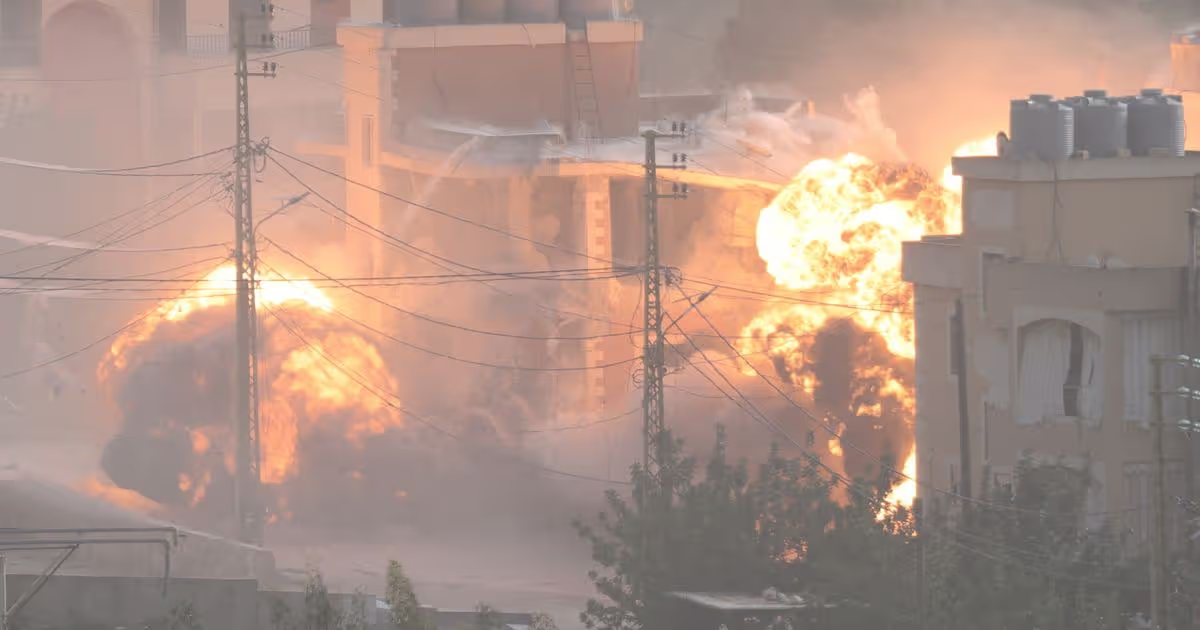
Today, Monday, as predicted Iran’s proxy force in Lebanon Hezbollah has joined the war, exchanging cross-border missiles with Israeli forces. Several US F-15 fighter jets are believed to have crashed above Kuwait, their pilots forced to parachute to safety and land apparently unharmed.
Iran has corrected US President Trump’s claim they wanted to negotiate with the US – dampening hopes the crisis might end soon. And a fresh onslaught of missiles has been fired this morning by Iran towards Israel although casualties are unknown.
Tehran has sent battalions of troops towards the country’s border with northern Iraq in a bid to stop Kurdish rebel from smuggling arms into Iran. As Tehran scrabbles to find a new leadership it is in disarray but shows little sign of bowing to US strikes
.
A temporary council is leading the country – comprising of the President Masoud Pezeshkian, Judiciary Chief Gholam-Hossein Mohseni-Ejei and Ayatollah Alireza Arafi. Under Iran’s constitution, the new supreme leader is to be appointed by the Assembly of Experts, an 88-member clerical body.
Mohseni-Ejei is the frontrunner at roughly 18% and other top contenders include Arafi and Iranian cleric Hassan Khomeini – or the position could be abolished.