Brits are stranded in Dubai as the US-Iran conflict grounds flights and closes airspace. Major airlines have suspended services, leaving tourists and residents unsure when they can return to the UK.
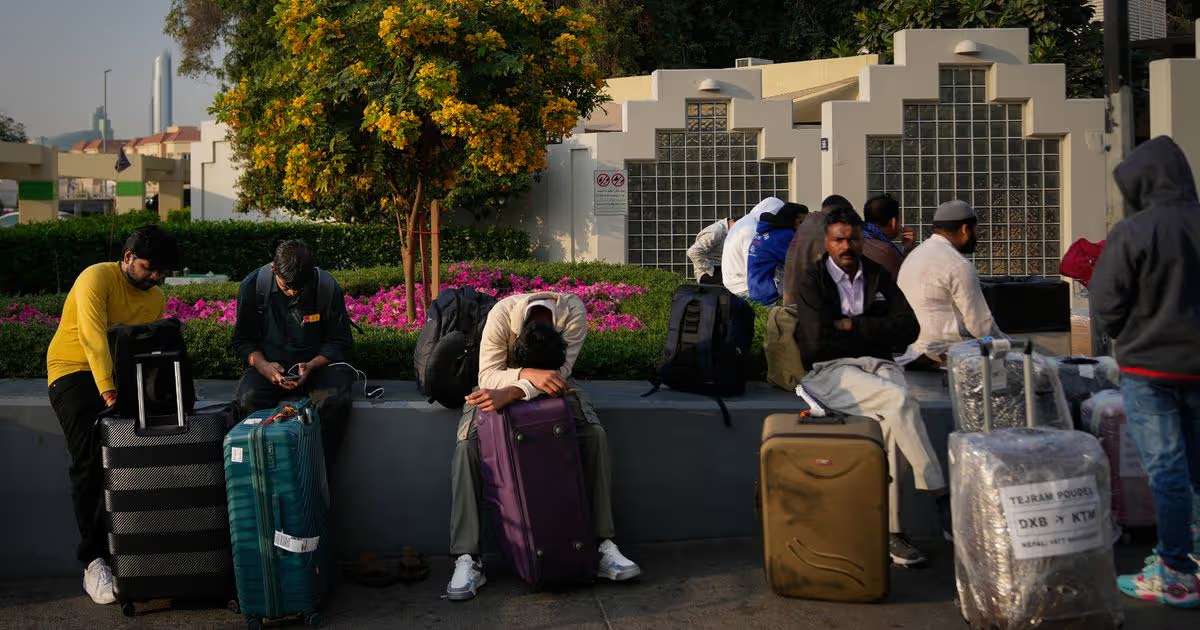
A British mum and her two children are among holidaymakers and residents that have been left stranded in the Middle East as the escalating conflict involving Iran has grounded flights and closed airspace across the Gulf.
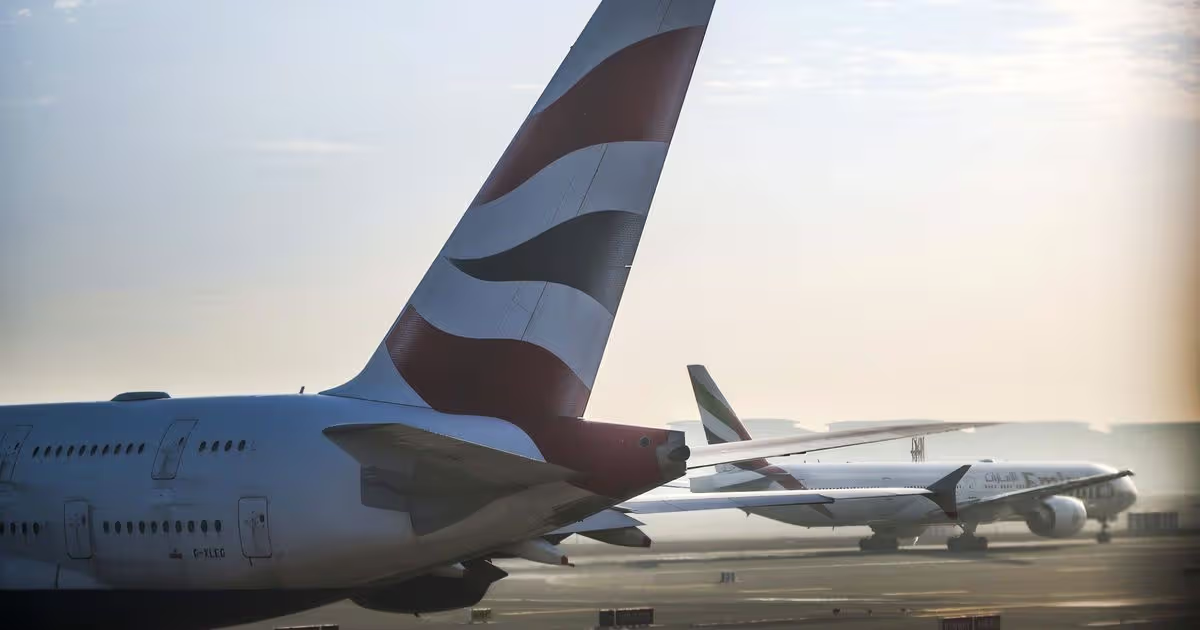
Major airlines have suspended services leaving thousands of Brits facing uncertainty over when they will be able to fly home. More than 3,400 flights were cancelled on Sunday alone across seven major Middle Eastern airports, according to flight tracker Flightradar24.
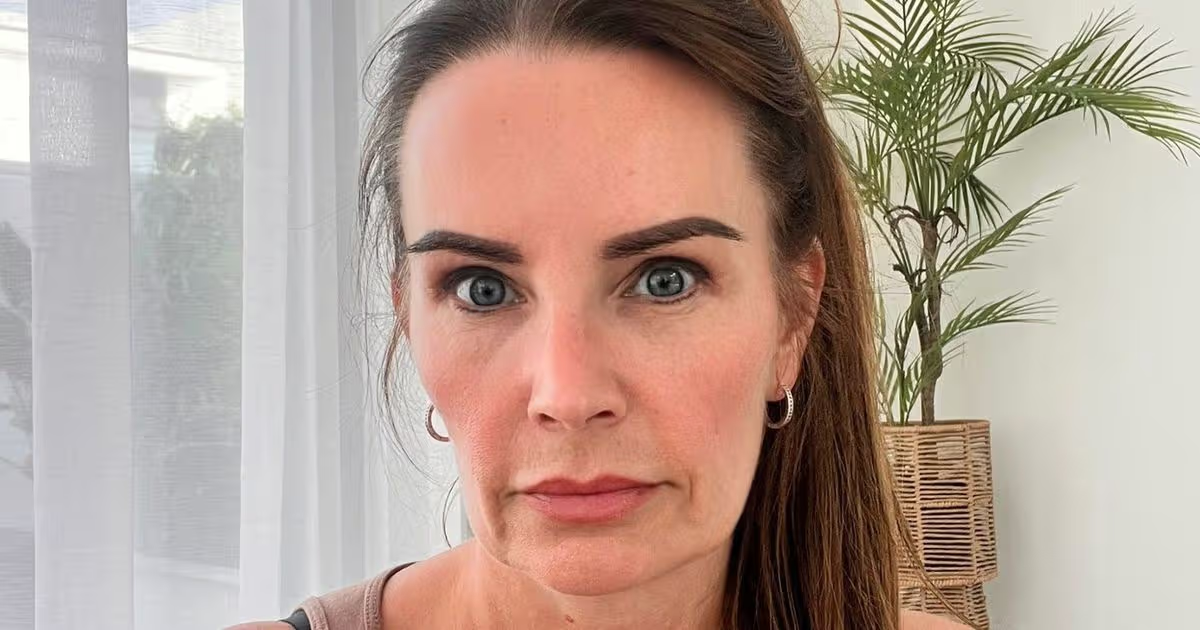
Vicky Lynch, a mum from Stockton, had been enjoying her holiday in Dubai with her two children when the United States and Israel launched strikes on Iran this weekend. Now, she and her children are trying to figure out where they can take shelter in their villa.
Ensure our latest headlines always appear at the top of your Google Search by making us a Preferred Source. Click here to activate or add us as your Preferred Source in your Google search settings.
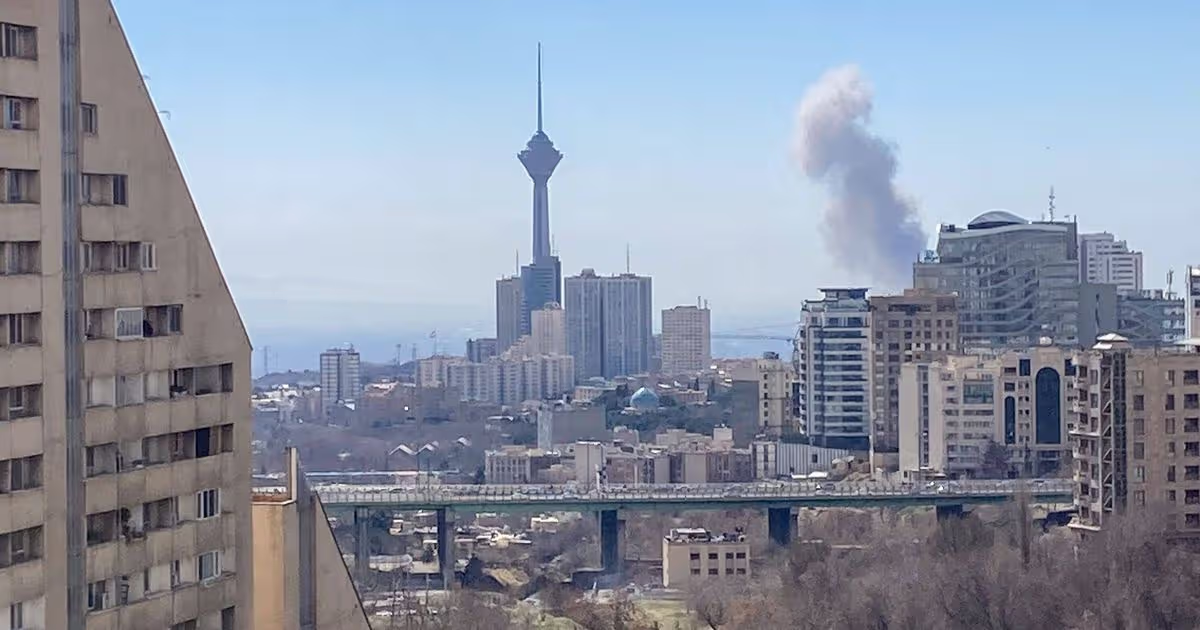
READ MORE: All the destinations affected after air strikes in Iran – not just DubaiREAD MORE: Dubai airport LIVE: Horror scenes after second ‘attack’ as smoke rises from city
Vicky, who regularly visits Dubai, spoke to Chronicle Live about witnessing missiles exploding in the sky from her villa. Her son, Presley, 21, and her 15-year-old daughter, Josie, were visiting a nearby waterpark at the time.
“It was so surreal, the villa was shaking. You don’t expect to go on holiday and have a war break out. You see it on the news but you don’t expect to live it,” she said. “When it kicked off I was in the back garden sunbathing and relaxing.”
“At first I couldn’t make out what was going on,” she continued. “I heard the noise and seen things in the sky. I didn’t think it would be missiles at first. I thought something had gone wrong with a plane in the sky.”
Vicky said the missile strikes seem “to come in waves” with clusters “every hour or so.” She added: “The scariest part was when we were about to go to bed last night.
“We eventually go to bed about 1am then the emergency alarms started going off on all our phones We have been trying to work out where we are going to take shelter in the villa. I unlocked the front door to make sure that was accessible.”
Vicky planned to shelter in the villa’s laundry room and stay away from the windows. She said she hoped they would be able to fly back to the UK on Wednesday, but it’s uncertain if Dubai International Airport will have reopened by then and whether flights will have resumed.
Vicky and her family are not alone. Thousands of flights to and from the UAE have been cancelled or rerouted, leaving families, tourists, and expats scrambling to rearrange travel plans. Dubai, Doha, and Abu Dhabi typically handle around 90,000 transit passengers per day between them, according to aviation analytics firm Cirium, meaning the knock-on impact for global travel is enormous. UK officials are urging Britons in the region to stay indoors where possible and follow the latest safety advice.
Graeme Souness, the former Rangers and Liverpool manager, said he was stuck in Abu Dhabi International Airport following the strikes, sharing on Instagram that he heard “loud bangs” overhead. Souness showed what would have been his plane in an Instagram video, saying he was supposed to head back to the UK for a Rangers-Celtic game.
“My mum said, ‘wherever you are son, there’s never a dull moment’, well, I’m at this airport, and we’re hearing some pretty loud bangs going off, and that is anti-missiles taking out missiles that are being fired at some American base,” he said.
“Chaos continues. The flight’s been cancelled, still hearing explosives, so we give up. We’re just going to check into a hotel for a couple of nights and see where we are. Hopefully, this will settle down and we’ll get back on our flight,” he added. “You get grumpy – well I do – when you get delayed and stuff at airports but I think we should think of people that maybe at this point might die. Anyway, I’ll keep you posted.”
Speaking with the BBC, holidaymakers Richard and Hannah said they had been on the way to Oman but were now stuck in Bahrain. Hannah described having an “uneasy 24 hours” on Sunday. Meanwhile Emma Belcher and her husband Vic were supposed to be on their way back to Heathrow from the Maldives via Dubai but their connecting flight was cancelled.
“There is absolutely no information about when they might open airspace so we don’t know how long we’ll be here,” Emma told the BBC. “We were really looking forward to getting home to see the children as we haven’t been away without them before.”
But passengers expecting refunds may not be in luck, according to Tim Riley, the MD of travel insurer True Traveller and the Chairman of the UK Travel Insurance Association. He told the Mirror: “Standard travel insurance policies do not cover war, hostile acts, civil war, military action, invasions or similar large-scale conflict events
“This exclusion is standard across the global insurance market because war presents systemic, unpredictable risks that cannot be priced into conventional travel insurance products.”
Riley said travellers are still covered for claims unrelated to the conflict itself, such as illness, lost or stolen baggage, or an accident not connected to the hostilities. But travel insurers cannot override government airspace restrictions, meaning airspace closures and the inability to leave the country tend not to be covered,
However, airlines do have a legal obligation to re-route passengers to their final destination once services resume, whether on their own aircraft or with an alternative carrier, Riley added
“It is important that travellers do not accept a refund if their flight is cancelled,” he said. “Accepting a refund effectively ends the airline’s duty of care, leaving the traveller responsible for arranging and paying for new flights themselves – which are likely to be significantly more expensive. Travel insurance will not cover the difference in cost between a refunded ticket and a new booking.”