Buenos Aires, Argentina: Diego Nacasio, 43, works full time as a salesman at a large hardware store in Florencio Varela, a city in the greater Buenos Aires area. He says he doesn’t need a calendar to know what day of the month it is. By the time his salary and that of his wife, who also works full time in a shop, run out, it is around the 15th.
From then on, they look for extra jobs, find things to sell, use their credit cards, and get small loans to pay for basics, including food, until the next paycheques arrive.
“I have never experienced anything like this,” Nacasio told Al Jazeera. “Over the past 25 years, we have worked hard, and our jobs allowed us to build a house from scratch, buy a car and give our 17-year-old son a decent life. Now, we have better jobs than we did then, and still cannot even afford food for the whole month.”
“Living on credit puts you in a very dangerous cycle. It’s very easy to fall behind with payments, and then it is a matter of chasing your own tail. Most people I know are in the same situation. We are living in a constant state of stress and anxiety, and it feels like there’s no way out.”
Nacasio’s story has become increasingly common in Argentina, where nearly half of the people say they are using savings, selling belongings or borrowing money from banks or relatives to cover basics, according to a report by Argentina Grande based on the latest official figures available. Another report, from Fundacion Pensar, found that 63 percent of Argentines have cut down on activities or services to make ends meet.
“The current situation in Argentina is extremely concerning. It is particularly worrying to see that even people who have one or several jobs are getting loans not to buy a house, a car or white goods [appliances], but to buy food,” Violeta Carrera Pereyra, sociologist and researcher at the Argentina Grande Institute and one of the authors of the report, told Al Jazeera.
A tale of two cities
Argentina’s President Javier Milei, who took office in December 2023, says his austerity economic plan, based on achieving fiscal balance while building up reserves of United States currency through drastic cuts to public spending, has revitalised the economy and lifted millions of people out of poverty. He is backed by the International Monetary Fund, which, despite Argentina’s record levels of foreign loans, projects an economic growth of four percent in 2026 and 2027.
But a closer look at the figures shows a different, more sombre, picture.
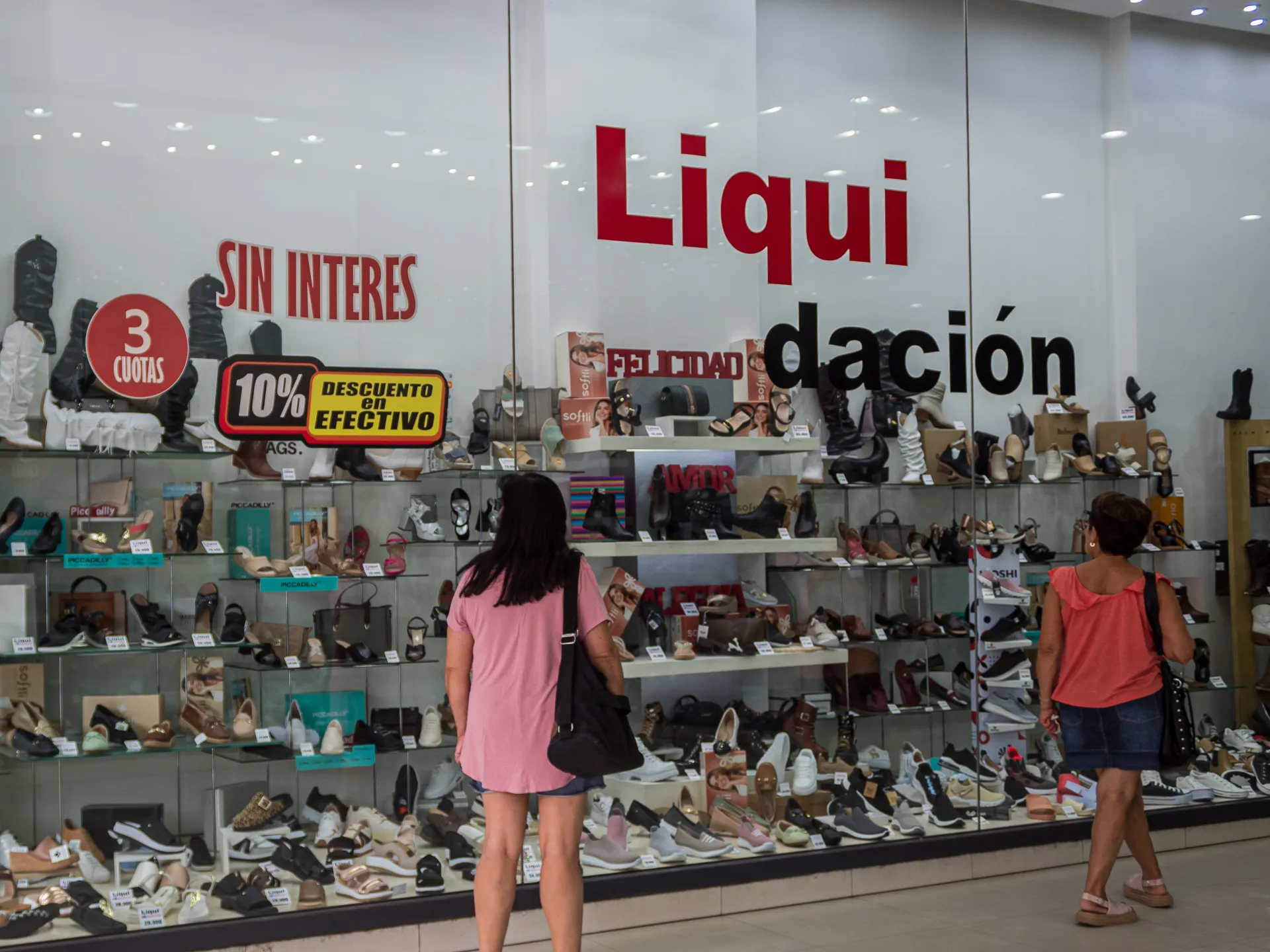
While economic activity in Argentina has increased overall, growth has been uneven. In November 2025, the most recent month for which data is available, sectors such as banking and agriculture saw growth, but manufacturing and commerce experienced sharp declines, with many factories and shops closing due to falling demand. Consumption, particularly of food, has been falling, with a 12.5 percent drop reported by independent food retailers.
Then there’s inflation, a key variable that in Argentina needs to be kept at bay in order to access essential foreign credit.
While Milei’s shock economic plan managed to significantly reduce inflation from record-high figures when he first took office in late 2023, experts say his administration has taken some controversial measures to keep it low. This includes forcing salaries to remain stagnant and under the rate of inflation, and opening the country up to cheaper imports. These policies have left many without money to spend and forced thousands of factories and small businesses to close.
Critics also say inflation figures are not representative of real price fluctuations. The tool used to measure inflation in Argentina, a sample basket of goods people consume, was developed in 2004 and does not reflect current consumption patterns, including the percentage that items like electricity and fuel – two areas that have seen price hikes considerably higher than inflation – represent in people’s real spending habits.
Carrera Pereyra says that figures also show that the rapid changes in Argentina’s economy have widened inequalities.
“On the one hand, we see that some sectors are able to consume more, so we see a rise in the sales of properties, cars, motorbikes, some as a result of the opening of imports,” she said. “But on the other hand, items like food and medicines are decreasing. So, some people can buy more things than before, while others are struggling to put food on the table.”
An obstacle course
Many Argentines who spoke with Al Jazeera said that making ends meet has become nothing short of an obstacle course. Juggling multiple demanding jobs, selling used items such as clothing, borrowing from relatives, seeking shark loans and bargain hunting have become a regular part of daily life.
“Shopping for food has become a job in itself,” said Veronica Malfitano, 43, a teacher and trade unionist, whose salary was cut by a quarter when Milei slashed public spending. “I team up with relatives or people I work with, and we buy in bulk. I use my credit card or get small loans. This month, for the first time, I have only paid the credit card’s minimum, something I had never done before. It’s all very stressful. Everybody I know is in the same situation.”
Research confirms Malfitano is not alone. Nearly half of supermarket purchases in Argentina are paid with credit cards, a record, according to recent official data.

Both borrowing and default rates have increased. It is estimated that around 11 percent of personal loans are unpaid, the highest rate since the Central Bank of Argentina began keeping records in 2010, according to Central Bank data.
Griselda Quipildor, 49, who lives with her husband, two daughters and two grandchildren, says that even though several people in her family work, money usually runs out by the 18th of every month and they have to start taking loans.
“At the start of the month, we pay debts, the bills and then the money runs out and we have to start borrowing again. It’s an endless vicious circle, one that is very difficult to get away from. We borrow from people we know and people we don’t know. It wasn’t like this before.”
Lucia Cavallero, an analyst, economics expert, and member of Movida Ciudad, told Al Jazeera that even though Argentina’s economic problems are longstanding, their impact on people’s homes is worsening.
“Debt has long been a serious problem in Argentina, and it has now become a crisis,” she said. “The proliferation of informal lenders has created a dangerous situation, leaving many people with no other options.”
In response, a political party has proposed a bill that would help people in lower-income sectors unify their loans and apply for a long-term payment plan at lower rates.
Cavallero says there are some positive aspects to the initiative, but that it largely misses the central point.
“It is good to see the political class recognising that debts are a serious problem for people,” she said. “However, this approach follows the logic of borrowing to pay off debt. While it may provide temporary relief, deeper structural changes are needed.
“Just as banks are bailed out, we are calling for families to be supported. A more sustainable solution is for wages to keep pace with the cost of the basic basket, so that people do not have to go into debt just to afford food,” Cavallero told Al Jazeera.
Despite all the challenges he and his family face, Nacasio says many people like himself still count themselves lucky.
“At least we own our house,” he said. “If we didn’t and we had to pay rent, I don’t know what we would do. I just need things to change, for us and for everybody. Things cannot continue like this.”