Unlock the Editor’s Digest for free
Roula Khalaf, Editor of the FT, selects her favourite stories in this weekly newsletter.
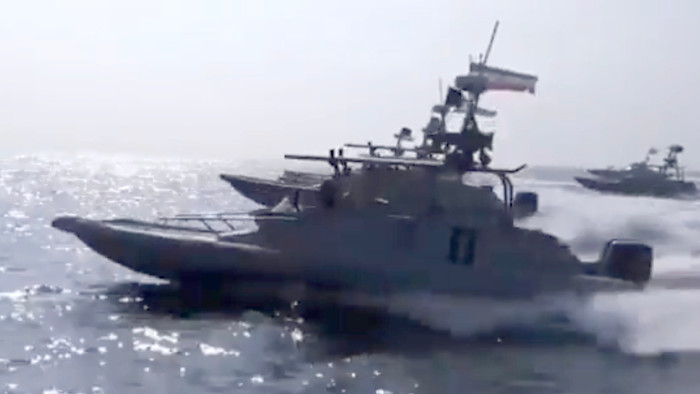
Iran’s Revolutionary Guards launched naval drills in the Strait of Hormuz on Monday, a move that reflected the escalating military tensions in the region a day before Tehran was due to hold talks with Washington.
The Islamic Revolutionary Guard Corps said the manoeuvres were designed to assess the “operational preparedness” of its naval units in response to “potential military and security threats” in the strait.
The guards’ chief commander Major General Mohammad Pakpour oversaw the exercises in person, Tasnim news agency reported.
The drills come after weeks of threats against Iran by US President Donald Trump, who has said he was weighing an attack in the wake of the Islamic republic’s violent crackdown on massive protests last month.
Trump last week dispatched a second aircraft carrier strike group to the region, warning that military action remains an option if Iran does not agree to a deal to defuse tensions over its nuclear programme.
Tehran and Washington were expected to hold a second round of talks mediated by Oman on Tuesday in Switzerland. Steve Witkoff and Jared Kushner represented the US in the first round of indirect talks with Iran’s foreign minister Abbas Araghchi in Oman earlier this month.
Araghchi wrote in a post on X on Monday that he was in Geneva “with real ideas to achieve a fair and equitable deal”, adding that “submission before threats” would not be considered.
US secretary of state Marco Rubio last week suggested that talks with Iran should address Tehran’s ballistic missile arsenal and its support for regional militant groups, along with Iran’s nuclear programme.
But Tehran has ruled out any dialogue over its missile programme or regional role, insisting that the nuclear issue be the sole focus of negotiations.
Araghchi also met Rafael Grossi, head of the International Atomic Energy Agency, in Geneva on Monday.
Iran’s foreign ministry said the discussions focused on technical issues related to Tehran’s co-operation with the agency, adding that Iran’s positions had been outlined to the agency ahead of the negotiations with the US.
Washington and Tehran had been in negotiations last year before the US briefly joined Israel’s 12-day war against Iran in June to bomb Tehran’s three key nuclear facilities.
Iran has refused to allow the IAEA to visit the facilities amid western concerns about the fate of its stockpile of highly enriched uranium.
Iranian authorities have warned that they would respond to another military strike with full force.
Supreme leader Ayatollah Ali Khamenei said earlier this month that Iran would not initiate a war or attack any country, but warned that any war waged by the US would spread across the region.
Iran has said that all US military bases in the region would be legitimate targets if hostilities break out.
The Revolutionary Guards said Monday’s exercises were aimed at securing Iran’s “smart control” of the Strait of Hormuz.
About a third of the world’s seaborne oil supplies pass through the strait each day, and Iran has repeatedly threatened to block all traffic through the vital maritime chokepoint in the event of an attack.
The guards hold multiple naval drills in the region annually. These include a range of operations from simulating swarm boat tactics to missile launches. Snap exercises are occasionally announced during periods of heightened regional tension.
This month, the US military shot down an Iranian drone near Iran’s coastal waters, saying it had “aggressively approached” a US aircraft carrier.