Unlock the White House Watch newsletter for free
Your guide to what Trump’s second term means for Washington, business and the world
Donald Trump has directed the Department of Defense to buy coal-generated electricity, as part of his ongoing push to revive the flagging industry.
In an executive order announced on Wednesday, the US president ordered defence secretary Pete Hegseth to strike agreements with coal power plants selected by the departments of defence and energy.
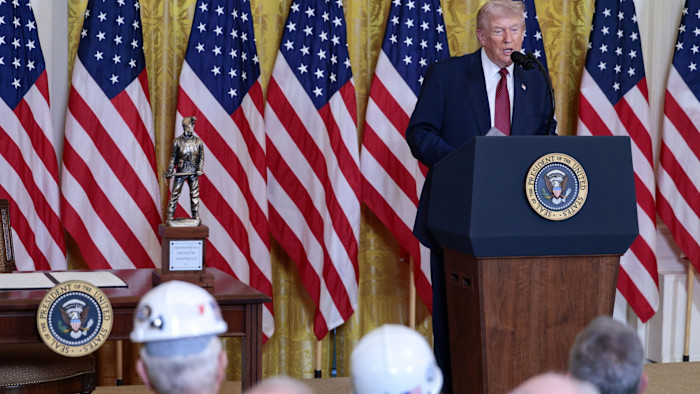
“It’s great to bring [the industry] back,” Trump said at a White House event with coal executives and mine workers before signing the directive. “You were treated very badly and now you’re being treated very well . . . Good luck, make a lot of money.”
The order could present an opportunity for the oversupplied coal industry to sell its excess stock, about 2.6 quadrillion British thermal units, a measure of energy produced, according to data from the Energy Information Administration.
The defence department is by far the biggest consumer of energy in the federal government, using 0.60 quadrillion Btu in 2024. In the same year the US consumed 7.9 quadrillion Btu of coal.
Trump will also allocate $175mn to upgrade coal power plants in Kentucky, North Carolina, Ohio, Virginia and West Virginia, with the aim of extending usage and improving efficiency. The average US coal plant operates for 44 years, and they experience unplanned outages at a higher rate than gas and nuclear facilities.
The order relies on a Cold War-era law that allows the White House to give directions to industry on national security grounds.
Trump has been an emphatic supporter of what he has repeatedly called “beautiful, clean coal”. Since returning to the White House last year he has pushed the comeback of coal as necessary to win the AI race with China, and has taken significant steps to boost the industry in response to rising electricity demand from data centres.
The Department of Energy has forced five coal plants to stay open past their retirement dates.
“Keeping these plants open should be a continuing priority both from a national security and an economic perspective,” said Michelle Bloodworth, chief executive of America’s Power, an industry group.
But the move has prompted legal challenges. The owners of one plant in Colorado have called the move unconstitutional. States and environmental groups are also pursuing lawsuits.
The Trump administration has also touted coal for its resilience during times of grid stress and extreme weather, such as the recent Winter Storm Fern, when coal plants supplied about 3.1 terawatt hours, up 30 per cent from the previous week, according to energy consultancy Wood Mackenzie.
“Coal doesn’t mind very cold weather,” said Trump in late January. “It’s not affected by bad weather; rain, snow, sleet, freezing cold.”
But industry experts say that coal power is expensive and environmentally devastating.
“Reality doesn’t lie: coal is a rapidly dwindling relic of the past, not a solution for the future,” said Julie McNamara, associate policy director with the Climate and Energy programme at the Union of Concerned Scientists.
“Forcing the use of increasingly unreliable and relentlessly uneconomic coal plants will risk outages and send high electricity costs higher,” she added.
Climate Capital

Where climate change meets business, markets and politics. Explore the FT’s coverage here.
Are you curious about the FT’s environmental sustainability commitments? Find out more about our science-based targets here